Showing posts with label 3D Printing. Show all posts

Monday, 26 September 2016

NUI Galway Centre Opens!

A €68m centre for medical device research will be officially launched at NUI Galway today.
The Centre for Research in Medical Devices will involve more than 250 researchers from a total of six academic institutions across the country, which is receiving support through Science Foundation Ireland.
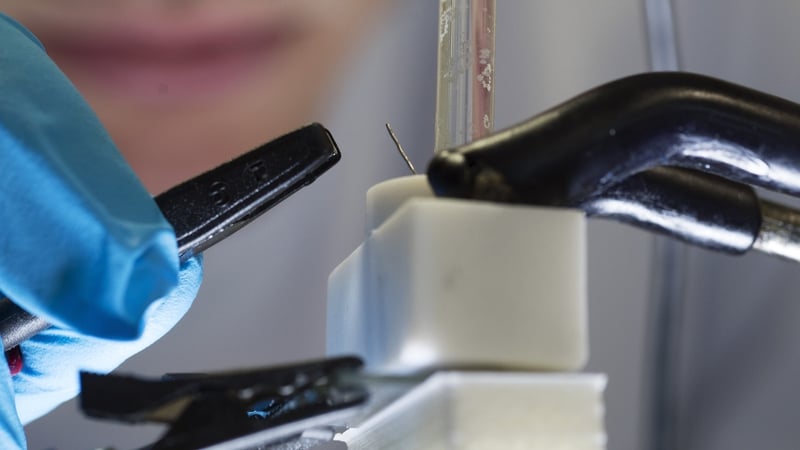

The centre will be based at NUIG

The medtech industry in Ireland is booming, with more than 400 firms in operation, employing 29,000 people, and producing nearly €13 billion worth of exports a year.

Based at NUI Galway, Cúram will bring together areas like glycoscience, biomaterials science, regenerative medicine, tissue engineering, drug delivery and medical device design.
It will train graduates from basic science right through to clinical application.
It will develop medical devices that mimic the body's biology, targeting chronic diseases like heart disease, diabetes and Parkinson's.
Devices like electrodes that degrade inside the body and 3D printed tendons and muscles will also be designed.
The centre has secured €68m in funding, with €37m coming from SFI, €12.5 million from two dozen Irish and multinational industry partners and €19 million from the EU's Horizon 2020 research fund.
Cúram will be opened by Minister for Jobs, Enterprise and Innovation Mary Mitchell O'Connor, who has welcomed its establishment.

Monday, 30 November 2015

3D printing helps surgeons plan life-saving operation

The 3D model revealed the twists and turns in the cerebral blood vessels

The surgeons needed to operate to correct a weakness, or aneurysm, in a blood vessel inside the patient's head.

Scans of the aneurysm revealed that the usual approach surgeons would take to fix it would not have worked.

3D printing is increasingly finding a role in medicine to either help doctors prepare before carrying out procedures or to make prosthetics.

After suffering vision problems and recurrent headaches, New York state resident Theresa Flint was diagnosed with an aneurysm that, if left untreated, would have proved fatal.

An aneurysm is a bulging blood vessel caused by a weakness in an artery wall that risks rupturing.
The usual way to treat such problems is to implant a metallic basket that strengthens the artery wall, said Dr Adnan Siddiqui, chief medical officer atthe Jacobs Institute in Buffalo, New York, who directed the treatment.

However, scans of the weak blood vessel revealed that this approach would not work.  "It was a serious problem from the standpoint that she had an extremely irregular brain aneurysm that would be tricky to treat with micro-surgery," he said.  The scans showed that the blood vessels were severely twisted and, as a result, very difficult to reach.

"There are some commonalities between all human beings," said Dr Siddiqui, "but at the end of the day our vascular tree is as different as our fingerprints."

To help the surgeons work out the best approach, the scans taken of Ms Flint's brain were turned into a 3D model with the help of 3D-printing specialist Stratasys.

It helped make a replica built of a polymer that mimics human tissue allowing the surgeons to plan their approach and practise the operation.

"While we were doing that mock procedure we realised that we had to change some of the tools we wanted to use, given her anatomy," said Dr Siddiqui.

"The day of surgery came and we tried out exactly what we thought would work best," he said, adding that Ms Flint had "done great" since the aneurysm was corrected.

Dr Siddiqui said 3D printing was increasingly being used to help plan procedures and make models of human anatomy that give surgeons a better idea of what they will encounter during an operation. Many hospitals have now established relationships with 3D printing firms to help surgical staff.

"It may not be needed for the majority of routine cases," he said, "but here its help was immeasurable."