Showing posts with label Children. Show all posts

Wednesday, 9 November 2016

Risks to Children!

The National Poisons Information Centre has issued a warning about the potential risks posed to children by liquid detergent capsules and room fresheners.

The centre has also reported an increase in calls, according to its annual report for 2015.
There were 9,691 inquiries to the centre last year, up 2.4% on the previous year.
Inquiries about liquid detergent capsules increased by 8% and the vast majority of the 344 cases involved children under the age of five years.
In one case, a child required intensive care admission.
While the number of calls from the public has increased, most calls are from GPs and hospital staff.
Over 5,220 calls to the centre last year related to children under ten years.
The report shows that most calls are about drugs, with paracetamol the most common drug involved in poisoning.
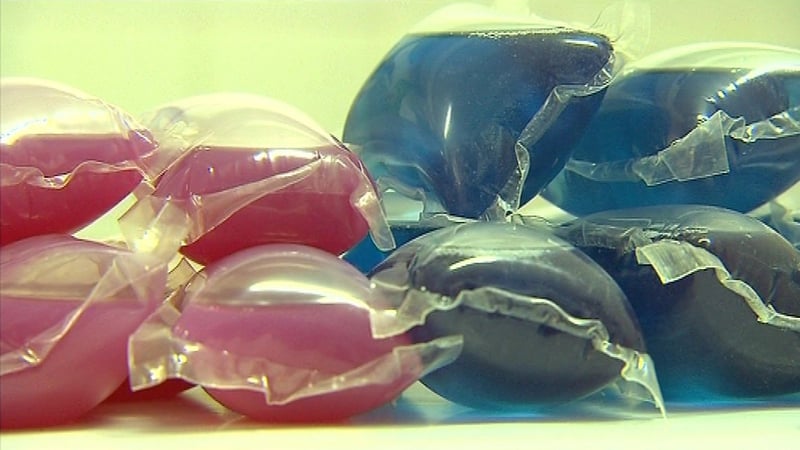
One child required intensive care in a case related to a liquid detergent capsule

It says that 82% of cases are accidental and 15% are intentional overdoses, or a result of recreational abuse.
Most poisonings happen in the home and often involve household cleaning products and chemicals.
Dr. Edel Duggan, Clinical Director at the Centre, has issued an alert to parents about room fresheners, sold as a liquid, in glass containing reeds.
The liquid diffuses up the reeds and a perfume is released from the reeds.
Dr. Duggan said that if ingested, both the carrier and the fragrance oils are potentially toxic, depending on the components.
The centre has also asked parents of young children to keep liquid capsules out of reach and locked away in their original containers.
It says that in most cases, contacting the poisons centre can avoid unnecessary emergency department attendances, reduce health care costs and alleviate parental anxiety.
The National Poisons Information Centre is based at Beaumont Hospital in Dublin.

Monday, 10 October 2016

Children Require Daily Exercise!

Children should spend at least three hours a day performing physical activities, according to the Finnish government.  
Parents have been advised to actively encourage their children to pursue hobbies and interests that require physical exertion.Children aged eight and under have been targeted in the move. Finland is known for producing some of the most physically fit children in Europe.
It also produces some of the highest academic results among schoolchildren in the developed world. Finland's Minister for Education and Culture, Sanni Grahn-Laasonen, believes this is no coincidence. Ms Grahn-Laasonen said physical activity contributed to a child's happiness and promoted learning by developing a young person's ability to interact socially. "When children exercise together they develop interaction skills and connect socially, and it's healthy, too," she told local media.  Anneli Rautiainen, head of basic education with the Finnish National Board of Education, told the BBC that schools would now be experimenting with new ways of teaching.


These include removing desks and chairs from some classrooms, so that children are not sitting as much while learning regular subjects. "The child has an active role. We will emphasise personalised learning. The learning environment should be modern and support different learners. In our new curriculum, we are looking at two to three hours a week of physical education and more outdoor activities. But we are also looking at non-traditional ways of teaching, some children learn very well sitting at a desk and listening, others would benefit greatly from moving around the room talking with their classmates," said Ms Rautiainen.
Finland is one of the first countries to put forward these recommendations, which will use classrooms to connect physical exercise with traditional learning


Thursday, 26 November 2015

Recent Acquisitions


Located at 612.3 NUT


Located at 610.72 MOU


Located at 616.810231 MOR


Located at 618.9201  PET


Located at 618.9200231 OXF

Wednesday, 15 April 2015

Schools study shows fitness level stalls in teenage girls


Boys’ fitness improves over the same age period, with 16-year-olds on average 33 per cent fitter than 12-year-olds, according to the challenge taken by 148 schools.

“The fact that girls are not showing the same improvement in cardiovascular fitness as boys is clearly a cause for concern,” said Prof Niall Moyna of DCU’s school of health and human performance, who set up the challenge four years ago.

Related research into children with low levels of fitness has found evidence of heart disease in the arteries of 15-year-olds, he said. The same children were also found to have high cholesterol, blood pressure and fat levels.

Both boys and girls improved their performance after undertaking a six-week fitness programme that forms part of the challenge, which was taken by more than 10,000 children this year.
The average improvement for boys was 12 per cent while for girls, coming from a lower base, it was 19 per cent.

Prof Moyna says a variety of social and cultural reasons may explain young girls’ poor fitness levels.
“There are issues around the continuing participation of girls in sport as they grow older. They may become unused to pushing themselves, to being out of breath, even to the fact their make-up could run.”

However, he is optimistic about the future because of a “paradigm shift” in recent years which has made it more acceptable for girls to continue in sport, as well as an increase in team sport options.

While Irish boys and girls are well above the European average for fitness for their age group, this is not regarded as an accurate guide to the minimum fitness level required for optimal health, according to Prof Moyna.

The European figures are a “race to the bottom” in terms of performance and Ireland should develop its own national norms, he maintains.

“Lifestyle behaviours tend to track from childhood to adulthood. Children who are unfit and overweight in their teenage years will likely be unfit and overweight as adults.”

Taoiseach Enda Kenny will today present prizes to the most improved schools in the challenge, which is sponsored by Aviva Health.  : The Schools' Fitness Challenge

Thursday, 2 April 2015

Children's Diets Are Raising Their Risk of Heart Disease

The rate of childhood obesity has been rising – and their risk of heart disease later in life along with it. The problem might be worse than we realize. A new study concluded that between 2003 and 2010, over 80% of children in the U.S. had a poor diet.
According to the team from NHS Behind the Headlines, the large survey behind these figures should be nationally representative. Called NHANES, the National Health and Nutrition Examination Survey is run by the Centers for Disease Control and Prevention (CDC).
The Behind the Headlines point out that the results can’t be exact. They point to reasons such as the survey being based on people’s memories of what was consumed – and the ideal dietary intakes weren’t based on the individual children’s age and other key characteristics. You can read more about it in PubMed Health’s Behind the Headlines feature.
How could this trend be turned around? Check out these systematic reviews at PubMed Health:

Friday, 24 October 2014

Concern over mental health services for children

An Oireachtas committee was told the waiting list for Child and Adolescent Mental Health services is too high

An Oireachtas committee was told the waiting list for Child and Adolescent Mental Health services is too high

An Oireachtas committee has heard that a third of children and adolescents in need of mental health services up to June this year, were admitted to adult wards.

The Director of Mental Health Reform told the Oireachtas Health Committee this morning that despite the Mental Health Code of Practice stating no child should be admitted into an adult ward outside exceptional circumstances, of 158 admissions, 53 were to adult units.

Dr Shari McDaid said this was "too many". She also told the committee that the waiting list for Child and Adolescent Mental Health services is too long. By July this year, 2,757 children were waiting to be seen by CAMS. Dr McDaid said that while that represented a 2% decrease on the previous year, "there are a large number of children waiting to be seen".

She also criticised the Health Service Executive, saying it had been very slow in deciding where to spend the money allocated to Mental Health Services, noting that it decided where to spend the 2014 allocation in September of this year.

Dr McDaid said it is the third year the decision on spending has been delayed, and said she hoped the HSE would be quicker with that decision in 2015.

View here

Tuesday, 7 October 2014

Study highlights long-standing child health issues

A new study shows that nearly 16%, or 11,000 three-year-olds, in Ireland have at least one serious long-standing health condition.
The report from the Institute of Public Health in Ireland identified five common serious conditions that were reported by carers.
These conditions were diagnosed asthma or asthma symptoms, diagnosed eczema or skin allergy, a sight problem that required correction and hearing problems that required correction.
Boys are 50% more likely than girls to have these conditions but the reason for this is unclear.
Children in the lowest social-economic households are 50% more likely than those in other households to have such a condition.
Children born with low birth weight are 70% more likely than other children to have sight problems.
Professor Kevin Balanda, Director of Research at the institute, said children with these conditions can have a poorer quality of life, poorer social and emotional development and poorer educational achievement.
He said knowing the characteristics of children with these conditions helps towards the development of policies and plans for services for children and their families.

Tuesday, 23 September 2014

Allergy service delays ‘put lives at risk’

Food Allergy and Anaphylaxis Meeting, Dublin 9-11th October

Public hospital services for treating children with allergies are completely swamped with year-long waits for first appointments, and three-year waits for a vital food allergy test at the country’s most established paediatric allergy centre.

The delays mean children are at risk of “further episodes of anaphylaxis” while waiting to be seen, according to Jonathan Hourihane, who heads the internationally recognised paediatric allergy service at Cork University Hospital.

“The HSE thinks once you are on a waiting list that you are safe, but that’s not quite the case because anaphylaxis can happen at any time,” said Professor Hourihane.

The saturated state of public paediatric allergy services is outlined in a draft document prepared by Professor Hourihane and colleagues for the HSE’s National Paediatric Clinical Advisory Group. In it, he describes each of the five services in Cork, Dublin, Drogheda, Mullingar, and Galway as “overwhelmed”.

The document, describing the current chaotic state of our allergy services, says there has been “no HSE strategy to develop allergy care in Ireland”, at a time when Census figures show that 28,600 children have all three major allergic conditions — asthma, eczema, and food allergy.

Paediatric dietician Ruth Charles, secretary of the Irish Food Allergy Network, said difficulties accessing expert opinion meant many parents were “chopping and changing children’s diets themselves, so that kids could end up with significant nutritional deficits”. She said: “For example, a parent might eliminate dairy because their child has eczema [inflammatory skin disease] and this can have a significant effect on bone development.”

The resource deficit in allergy services extends to adults — there is no public adult service — and to the number of doctors, employed in the area. Between the five paediatric services, there are just two whole time equivalent allergy consultants.  Professor  Hourihane’s document says if we were to follow UK guidelines, we should have nine, but that “a realistic goal would be the creation of two additional full-time posts within the current specialist services”.

Ms Charles said another deficit was the lack of allergy training for undergraduates. She said such training was particularly important in relation to maternity hospital staff, public health nurses, and GPs as the first points of contact with infants with allergies.

The deficits in allergy services are particularly relevant at a time when Ireland is due to host — for the first time — the international Food Allergy and Anaphylaxis Meeting 2014, which takes place in Dublin’s Convention Centre on October 9 to 11.

The conference, designed for healthcare professionals, will be attended by worldwide allergy experts.

View full Press Report here

Monday, 22 September 2014

Location Impacts on Access to Speech Therapy


Three thousand children are waiting more than a year for speech therapy, as Ireland has just half the number of language therapists it needs.  A paper due out today, finds that access to speech and language therapy is effectively a lottery - depending on where you live.

The report by Inclusion Ireland found that residents of Wexford and Donegal were found to be less likely to have quick access to services than those in parts of Cork and Wicklow.
One in four affected families said, their children had not seen a therapist in a year.

To read 'The Case of Speech and Language Therapy' please click here.

Monday, 26 May 2014

Kidney dialysis machine 'miniaturised' for babies

Italian scientists have designed a dialysis machine specifically to treat babies with kidney failure, which they say could improve treatment.
Dialysis machines for adults can cause complications when used in very young children, the Lancet study says.
The miniaturised machine has been tested on a newborn with multiple organ failure, whose kidney function was restored after 30 days.
UK experts warn dialysis is still very challenging, even with new equipment.
Prof Claudio Ronco, from the International Renal Research Institute at San Bortolo Hospital in Vicenza, designed and developed the new machine to treat babies and small infants weighing between 2kg and 10kg (4lb and 1st 8lb).
In his study, published in the Lancet, he said adult kidney dialysis machines were inaccurate and potentially unsafe when used in those babies.
Prof Ronco said: "A major problem is the potential for errors in ultra-filtration volumes.
"Adult dialysis equipment has a tendency to either withdraw too much fluid from a child, leading to dehydration and loss of blood pressure, or too little fluid, leading to high blood pressure and oedema."
The new machine - named Carpe Diem (cardio-renal pediatric dialysis emergency machine) - replaces the lost function of the kidney by removing excess fluid and urine from the body through blood vessels.
It allows the use of a much smaller-sized catheter than normal which could prevent damage to blood vessels in babies, the study says.

Thursday, 22 May 2014

Ireland must do better on kids' exercise


The new international scale has graded Ireland with an overall D minus.

The relatively low rating has increased concern over the planned removal of physical education (PE) from junior cycle secondary school education. And under some physical activity headings, no grade was given for Ireland as adequate benchmarking or data does not exist to give an accurate score.


According to data for the island of Ireland, only between 12% and 43% of children get enough physical activity.

Ireland sits in the middle of the other countries in the new international physical activity grading and, according to Irish experts, is neither leading nor lagging on how supportive we are as a country to children's physical activity.

Dr Sarahjane Belton, Lecturer in Physical Education at Dublin City University and member of the team that developed the report card, said: "there is concern that the planned removal of PE as a subject from the junior cycle curriculum by the Department of Education and Science in the Republic will affect the PE grade in the future and this is something highlighted as a gap that the Government should address."

Monday, 19 May 2014

Children's Wellbeing - Internet Usage

Children who spend large amounts of time glued to a computer risk developing mental health problems such as loneliness, depression and anxiety, government health advisers have warned.

In a hard-hitting paper, (click here to view) Public Health England, which advises the National Health Service and government, makes a clear link between the overuse of the internet and social networking sites and lower self-esteem.

Those that spend more than four hours a day looking at a screen are particularly vulnerable to mental illnesses, the report said. The findings will continue to fuel the debate over the health risks of social networking sites and computer games as companies like Facebook come under fire for failing to have a more effective age checking system for new joiners.

You must be 13 or over to join Facebook, but many younger children hold accounts. “Children who spend more time on computers, watching TV and playing video games, tend to experience higher levels of emotional distress, anxiety and depression,” the report said.

Some 750,000 teenagers, the study found, are so depressed they have “nothing to live for”

View more here

Wednesday, 9 April 2014

NUI Galway Researching Chronic Pain In Children


Researchers with the School of Psychology at NUI Galway are currently inviting children aged from 7-12 years who have experienced chronic or recurrent pain for a period of three months or more, and their parents, to help develop an effective pain management programme for young children which will be computer-based and accessed online. 

Group sessions will be run at a number of locations across Ireland including Dublin, Cork, Galway and Belfast. Children with any type of chronic or persistent pain including abdominal pain, back pain, musculoskeletal pain, headache and combined or widespread pains, are invited to participate.

Children and their parents will use art materials to think, draw or write about ideas or topics which they think are important for children and parents dealing with chronic pain

NUI Galway PhD student and group facilitator, Angeline Traynor said: “Chronic pain is increasingly prevalent in young people and can have a significant impact on the day-to-day quality of life. The most common types of chronic pain in children are abdominal pain, back pain, musculoskeletal pain, headache and combined or widespread pains.”

This programme is part of a PhD research project being carried out at NUI Galway by PhD student Angeline Traynor with Dr. Brian McGuire of the university’s School of Psychology and the Centre for Pain Research. The study is supported by Galway University Foundation.


For information on participating, please contact Angeline Traynor at a.traynor2@nuigalway.ie or 086 0378562 or go directly to www.helpkidswithpain.com

More new books added to our Collection


Located at 616.029 CON


Located at 618.1407545 SHA


Located at 362.7 SAF

Friday, 28 March 2014

Less asthma in children since smoking ban


International smoking bans, including the one in Ireland, have led to sharp falls in the numbers of children going to hospital with asthma attacks and the number of babies born before full term. View press release in IT here

The review of 11 studies carried out in North America and Europe, including a 2013 study in Ireland, published in the Lancet today, (view abstract here) shows that the numbers of both fell by a tenth within 12 months of the bans being introduced.

Meanwhile, the number of children born before full term who are smaller than they should be given the stage at which they are born has declined by 5 per cent, said Dr Jasper Been of the Maastricht University Medical Centre.

An Irish study in 2012 found the smoking rates of mothers fell by 12 per cent in the year after the smoking ban was introduced a decade ago. It also reported that pre-term birth risks had fallen by a quarter.

Monday, 24 March 2014

Call for smoking ban in cars carrying children


It also wants all publicly funded institutions, especially hospitals and academic campuses, to be completely smoke free.
Doctors have made the call in a new policy statement to mark the tenth anniversary of the smoking ban.
The Irish Heart Foundation said that heart attacks have reduced by over 10% as a result of the ban.
The Irish Cancer Society claims that there has been a 25% reduction in the number of people smoking since the ban was introduced.
View news release here

Thursday, 13 March 2014

Eating disorders among boys increasing


New figures show a worrying increase in the overall prevalence of eating disorders in Ireland, a younger age at onset and a rising incidence in boys.

The most up-to-date, official figures on the incidence of eating disorders suggest that 200,000 Irish people are affected. 

An audit carried out by the Nutrition and Dietetics Department at the Children’s University Hospital (CUH), Temple Street, has reported a 130 per cent increase in the number of patients admitted to the hospital with anorexia nervosa (AN) between 2005 and 2011. The study, published in the February edition of the Irish Medical Journal, also found that the average age of AN patients at presentation had decreased by six months compared to 2002, supporting the view that eating disorders are affecting children at a younger age than previously thought. In the Temple Street study, the average age at presentation was 13.5 years but the authors remarked that the mean age at onset of symptoms was six months prior to seeking treatment.

The study also supports a perceived increase in the prevalence of eating disorders among boys. Previous estimates suggested that 5 per cent of ED patients are male. In the Temple Street study, 30 per cent of patients admitted with AN were boys. While boys tended to present less underweight than their female counterparts, the timescale between onset of symptoms and presentation was greater in male patients.
Ms Marianne O’Reilly, Senior Paediatric Dietician at Temple Streeet and lead author on the study, said the study raises some issues of concern.

Wednesday, 5 March 2014

Passive smoking irreversibly damages children's hearts

Exposure to second-hand smoke in childhood causes irreversible damage to children's arteries.
It also increases their risk of heart attacks or strokes when they grow up, according to a an international study published today.
The research, which lends weight to campaigns for smoking to be banned in private cars and homes, found passive smoking leads to a thickening of children's artery walls.
It adds over three years to the age of blood vessels by adulthood.
"Exposure to passive smoke in childhood causes direct and irreversible damage to the structure of the arteries," said Seana Gall, a researcher in cardiovascular epidemiology who led the study at the University of Tasmania.
As well as the six million people a year killed by their own smoking, the World Health Organisation says another 600,000 die every year as a result of exposure to other people's smoke – known as second-hand or passive smoking.
About 40% of all children are regularly exposed to second-hand smoke at home, and almost a third of the deaths attributable to second-hand smoke are in children.
Today’s study, published in the European Heart Journal, was the first to follow children through to adulthood to look at links between exposure to parents' smoking and thickness of the innermost two layers of the arterial wall, known as carotidintima-media thickness (IMT).
Researchers from Finland and Australia looked at data from 2,401 people in Finland and 1,375 people in Australia who were asked about their parents' smoking habits.
The scientists used ultrasound to measure the thickness of the children's artery walls once they had reached adulthood.
The results showed that carotid IMT in adulthood was 0.015mm thicker in those exposed to both parents smoking than in those whose parents did not smoke.

Wednesday, 26 February 2014

New WHO analysis shows alarming rates of overweight children

According to the World Health Organisation - Childhood obesity is one of the most serious public health challenges of the 21st century. The problem is global and is steadily affecting many low- and middle-income countries, particularly in urban settings. The prevalence has increased at an alarming rate. Globally, in 2010 the number of overweight children under the age of five, is estimated to be over 42 million. Close to 35 million of these are living in developing countries.
Overweight and obese children are likely to stay obese into adulthood and more likely to develop noncommunicable diseases like diabetes and cardiovascular diseases at a younger age. Overweight and obesity, as well as their related diseases, are largely preventable. Prevention of childhood obesity therefore needs high priority.
The prevalence of overweight and obesity in adolescents is defined according to the WHO growth reference for school-aged children and adolescents (overweight = one standard deviation body mass index for age and sex, and obese = two standard deviations body mass index for age and sex).
New WHO analysis shows alarming rates  of overweight childrenPress releaseCopenhagen and Athens, 25 February 2014