Showing posts with label Stress. Show all posts

Wednesday, 3 May 2017

Health Survey - BURNOUT!

One in three hospital doctors have experienced burnout, according to a new survey. 
The National Study of Wellbeing of Hospital Doctors in Ireland, published today, also found up to 10% reported severe to extremely severe levels of depression, anxiety and stress.

This is despite the finding that over 70% of doctors are strongly motivated to practice medicine.
Four out of five doctors reported going to work at times, when they were ill or injured.
The same proportion reported significant work stress and felt the effort put into their work, exceeded the rewards gained.
The study found that, on average, doctors worked 57 hours a week and just 20% said they had enough time for family and personal life.
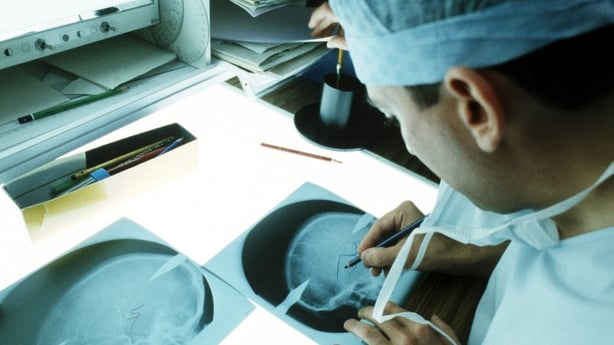


The research study was led by Dr Blánaid Hayes, Dean of the Royal College of Physicians of Ireland's Faculty of Occupational Medicine.

Her study, which was launched in 2014, surveyed hospital doctors in Ireland at trainee and consultant level across all specialties. It aimed to explore the topics of lifestyle behaviours, personal well-being and workplace well-being.
The findings were positive in some areas such as the very high number of doctors (over 70%) who expressed a strong desire to practise medicine and eight in ten reporting good or better overall health and general quality of life.
It found 80% reported less than optimal levels of physical activity, one in ten drank alcohol to excess occasionally and 10% smoked.
Commenting on her research, Dr Hayes said that she sees many front line health professionals at her practice who require care and support. "This study has addressed a gap in the knowledge-base on the health and well-being of hospital doctors in this country, including the challenges posed by stress and mental ill health.
"As an occupational physician, I know first-hand that this is a problem because I see it in my practice and I hear it from my colleagues in other hospitals too.

"Front line healthcare workers and clinicians are presenting with mood disorders and stress-related conditions which are at least in part related to working conditions including staff shortages."

Tuesday, 2 December 2014

Swedish study on Mindfulness as treatment for Depression and Anxiety

Mindfulness treatment as effective as CBT for depression and anxiety
Even though a growing body of research has demonstrated the legitimate mental and physical health benefits of meditation, some people still consider mindfulness to be merely a New Age fad rather than a serious treatment option.
Now, a new Swedish study offers more compelling evidence for the effectiveness of mindfulness-based practices in treating anxiety and depression.
Researchers from Lund University found group mindfulness treatment to be as effective as individual cognitive behavioral therapy (CBT) in treating individuals suffering from anxiety, depression and severe stress responses -- and it may be more affordable and convenient.
The research was conducted at 16 health care centers in Southern Sweden. A total of 215 patients with anxiety, depression or severe stress reactions were randomly sorted into either a regular treatment group, in which they underwent individual CBT sessions, or underwent 10-patient group mindfulness treatment sessions. Both programs lasted for eight weeks.
Before and after the treatments, the participants were asked to fill out questionnaires to determine the severity of their anxiety and depression symptoms. Among both groups, self-reported symptoms of anxiety and depression decreased. The researchers noted that there was no statistical difference between the CBT and the mindfulness groups.  Earlier this year, a review of 47 studies showed that evidence of a positive effect of mindfulness on managing anxiety, depression and pain had been proven across a number of clinical trials.
"Clinicians should be prepared to talk with their patients about the role that a meditation program could have in addressing psychological stress," the researchers wrote in a paper published in the journal JAMA Internal Medicine in January.
This reduction of symptoms is likely rooted in actual changes in the brain. In 2011, Harvard researchers found that participating in an eight-week mindfulness training program created significant changes in brain areas associated with sense of self, empathy, stress and memory. MRI data revealed that meditation increased gray-matter density in the hippocampus, a region associated with learning and memory, and decreased density in the amygdala, a brain region associated with fear, anxiety and stress responses.
The findings were published online last week in the British Journal of Psychiatry.

Tuesday, 7 October 2014

UCC researchers investigate why some can resist stress

From left: Dr. Olivia O'Leary, Dr. Daniela Felice & Prof. John F. Cryan

Why on the rollercoaster of life are some people more resilient to the negative effects of stress than others?
Now University College Cork neuroscientists show that certain receptors in the brain play an important role in determining how we respond to different types of stress.  Their research is being published today in the prestigious international journal Proceedings of the National Academy of Sciences USA
Scientists based at the Dept of Anatomy & Neuroscience and the Alimentary Pharmabiotic Centre in University College Cork, Cork, Ireland have identified a novel molecular mechanism that determines how the brain responds to chronic stress.  Prof John Cryan and Dr Olivia O’Leary, together with their PhD student Daniela Felice and their colleagues have shown that different subtypes of a given receptor (the GABAB receptor) can confer vulnerability to stress (both in early-life and in adulthood).  
Dr O’Leary says “although it is early days, these data show that these receptors could be important targets for the development of new drugs in the treatment of depression, where there is still such an unmet medical need”.  Indeed, Prof Cryan says that “understanding the molecular factors that enable the brain to be stress resilient is one of the most exciting areas in neuroscience research currently and these data position the GABAB receptor at the heart of such efforts”, “we still have some way to go to translate these findings into humans but we are very excited by these data“ Cryan continued.  

Monday, 25 November 2013

NUI Galway Launch Free Advice Booklet for First Year Students


 ‘Risky Bizzness: Student Wellbeing for Successful Students’, was commissioned by the Health Promotion Service, part of NUI Galway Student Services, which aims to assist students to reach their full potential by providing non-judgemental and up-to-date information to help students make informed decisions.
‘Risky Bizzness: Student Wellbeing for Successful Students’ is based on the popular blog riskybizzness.blogspot.ie which mixes facts and humour to encourage students to look after their health and wellbeing and boost their resilience. 
Like the blog, the new booklet provides information on relationships, study tips, nutrition, budgeting and much more. There are facts, ideas, contact details and also plenty of online links to articles and video clips.
The booklet was written Rab Fulton, the editor of the riskybizzness blog, with Cindy Dring, Health Promotion Coordinator, NUI Galway student services.

For more on Health Promotion in NUI Galway visit http://www.nuigalway.ie/student_services/health_promotion/

Amazon workers face 'increased risk of mental illness'

A BBC investigation into a UK-based Amazon warehouse has found conditions that a stress expert said could cause "mental and physical illness".
Professor Michael Marmot was shown secret filming of night shifts involving up to 11 miles of walking - where an undercover worker was expected to collect orders every 33 seconds.
It comes as the company employs 15,000 extra staff to cater for Christmas
Amazon said the safety of its workers was its "number one priority."
Undercover reporter Adam Littler, 23, got an agency job at Amazon's Swansea warehouse. He took a hidden camera inside for BBC Panorama to record what happened on his shifts.
Professor Marmot said: "The characteristics of this type of job, the evidence shows increased risk of mental illness and physical illness."
"There are always going to be menial jobs, but we can make them better or worse. And it seems to me the demands of efficiency at the cost of individual's health and wellbeing - it's got to be balanced."
See Panorama: The Truth Behind The Click, BBC One, Monday 25 November at 20:30 GMT and then available in the UK on the BBC iPlayer.

Monday, 4 November 2013

Centre for Pain Research at NUI Galway publish new findings

NUI Galway researchers publish new findings on the brain’s marijuana-like chemicals in stress-pain interactions


Dr David Finn, Leader of the Galway Neuroscience Centre, Co-Director of the Centre for Pain Research at NUI Galway
New findings investigating the influence of a stress-sensitive genetic background on pain have been published in the leading journal in the field Pain, by NUI Galway researchers. The work, funded by Science Foundation Ireland and the Irish Research Council, was carried out by Dr David Finn and his research team in Pharmacology and Therapeutics, Centre for Pain Research and Galway Neuroscience Centre at the National Centre for Biomedical Engineering Science, NUI Galway.
Heightened pain in individuals who are stressed, anxious or depressed is a widely recognized but poorly understood phenomenon. A key factor is the contribution of genetic background and its influence on stress responding and emotional processing. A particular genetic background can predispose individuals to higher stress, anxiety and pain responses but it is not known why. 
Previous findings have shown that pain is subject to influence by marijuana-like chemicals called endocannabinoids in a brain region called the rostral ventromedial medulla.  Working with Dr Finn, first author Dr Kieran Rea was able to show that a genetic background associated with higher stress and anxiety responses was associated with a greater pain response and a blunted response of these endocannabinoids in the part of the brain called the rostral ventromedial medulla.
Click on article title below to view the full article in Pain