Showing posts with label Cancer Research. Show all posts

Monday, 8 May 2017

Blood Test to Detect Cancer


'Exciting' blood test spots cancer a year early.

Blood test                           
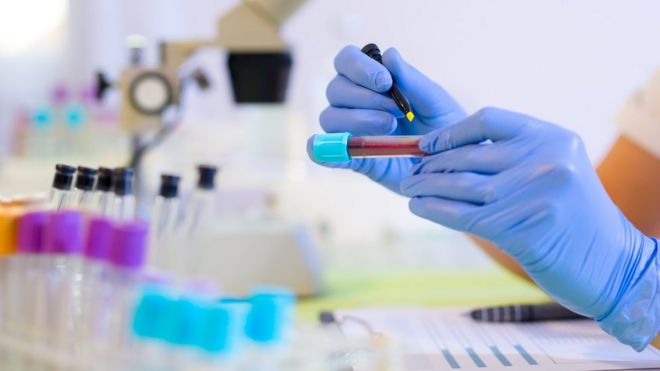
Doctors have spotted cancer coming back up to a year before normal scans in an "exciting" discovery.
 
The UK team was able to scour the blood for signs of cancer while it was just a tiny cluster of cells invisible to X-ray or CT scans.
It should allow doctors to hit the tumour earlier and increase the chances of a cure.
They also have new ideas for drugs after finding how unstable DNA fuels rampant cancer development.
The research project was on lung cancer, but the processes studied are so fundamental that they should apply across all cancer types.

Blood test

In order to test for cancer coming back, doctors need to know what to look for.
In the trial, funded by Cancer Research UK, samples were taken from the lung tumour when it was removed during surgery.
A team at the Francis Crick Institute, in London, then analysed the tumour's defective DNA to build up a genetic fingerprint of each patient's cancer.
Then blood tests were taken every three months after the surgery to see if tiny traces of cancer DNA re-emerged.
The results, outlined in the journal Nature, showed cancer recurrence could be detected up to a year before any other method available to medicine.
The tumours are thought to have a volume of just 0.3 cubic millimetres when the blood test catches them.

Friday, 10 April 2015

‘Off switch’ identified to cut spread of bowel cancer


Dr Aideen Ryan from NUI Galway found that switching off a specific protein in bowel cancer cells can stimulate an anti-tumour immune response.
The research that opens new avenues for the development of novel treatment approaches was funded by the Irish Cancer Society.
Bowel cancer is a significant health concern in Ireland with 2,400 new cases diagnosed and almost 1,000 deaths from the disease every year.
Up to now, therapeutic developments to stop its spread to other parts of the body have had very little success.
Dr Ryan found the activity of a key protein known as NF-kappaB, with the help of a type of immune cell, called tumour-associated macrophages (TAMs), promotes the spread of cancer cells from the bowel to the abdominal cavity.
TAMs are present within or close to tumour tissue and can act in tumour-promoting or a tumour-killing manner, depending on their surrounding environment.
Dr Ryan and colleagues in NUI Galway found TAMs can be switched from being tumour-promoting to being tumour-killing by turning off the NF-kappaB protein in bowel cancer cells, thereby causing a significant reduction in bowel cancer spread to the abdominal cavity.
Dr Ryan said the findings had, for the first time, uncovered the effect of targeting the NF-kappaB protein in bowel cancer cells.
“We are continuing this important research in order to develop a new treatment approach for bowel cancer which could potentially result in better treatments for patients with this disease,” she said.

Thursday, 19 February 2015

Understanding resistance to cancer drugs

Pioneering new drug treatments are showing great promise in the treatment of many cancers.
The BBC's Panorama programme spent 18 months following a group of patients at the Royal Marsden Hospital in London on a range of treatments, many of which target specific genetic mutations which drive cancer growth.
Some patients whose cancer had spread and been given months to live have kept the disease at bay for years, and the treatments increase the chance of curing patients whose disease is caught early enough.
The trials at the Royal Marsden are part of a unique collaboration with the Institute of Cancer Research - where doctors divide their time between studying the disease in the laboratory and seeing patients in hospital.
Dr Udai Banerji works at The Institute of Cancer Research, London, and The Royal Marsden.

Tuesday, 2 December 2014

UL researchers in bowel cancer breakthrough


Researchers at University of Limerick and University Hospital Limerick have identified several new genetic biomarkers which better predict outcomes for patients with bowel/colorectal cancer.
The research team identified genes that are predictors of cancer recurrence and can also help to identify a patients’ suitability to specific types of chemotherapy.
Professor J. Calvin Coffey Graduate Entry Medical School, UL and Colorectal Surgeon, University Hospital Limerick explains: “One of the key early events in the spread of cancer is its spread to involve the lymph glands that drain the colon. The identification of tumours that will spread to the glands is a key challenge for clinicians as these are the patients most likely to benefit from chemotherapy.”
“The ability to avoid harmful chemotherapeutic side-effects is a clinical need that has yet to be met by the diagnostic tools available to clinicians. In Ireland colorectal cancer is the 3rd most common cancer with 2435 new cases diagnosed each year. This diagnostic instrument that we have developed, and this research in general, will impact on patients globally as we can now pin-point precisely patients who will develop spread to glands, and thus benefit from chemotherapy.”
The research findings were published in the Annals of Surgery (the premier surgical journal worldwide)–http://www.ncbi.nlm.nih.gov/pubmed/24169164 “Introducing a novel and robust technique for determining lymph node status in colorectal cancer.”

Wednesday, 29 October 2014

Cancer-killing stem cells engineered in lab

Toxin-producing stem cells (in blue) help kill brain tumour cells in the tumour cavity (in green)

Scientists from Harvard Medical School have discovered a way of turning stem cells into killing machines to fight brain cancer.  

In experiments on mice, the stem cells were genetically engineered to produce and secrete toxins which kill brain tumours, without killing normal cells or themselves.  Researchers said the next stage was to test the procedure in humans.

A stem cell expert said this was "the future" of cancer treatment.

The study, published in the journal Stem Cells, was the work of scientists from Massachusetts General Hospital and the Harvard Stem Cell Institute.

For many years, they had been researching a stem-cell-based therapy for cancer, which would kill only tumour cells and no others.

They used genetic engineering to make stem cells that spewed out cancer-killing toxins, but, crucially, were also able to resist the effects of the poison they were producing.

They also posed no risk to normal, healthy cells.

In animal tests, the stem cells were surrounded in gel and placed at the site of the brain tumour after it had been removed.

Their cancer cells then died as they had no defence against the toxins.

Wednesday, 24 September 2014

NUIG Cancer Researcher Awarded for Participation in Lindau Nobel Laureate Awards

The Minister for Skills, Research and Innovation, Mr Damien English T.D., (left) and Professor Orla Feely, Chairperson of the Irish Research Council, (right) recently presented NUI Galway researcher Dr Aideen Ryan with an award in recognition of her selection and participation in the Lindau Nobel Laureate Meetings

Since 1951, the Lindau Nobel Laureate Meetings have been bringing together the most esteemed scientists of their times with outstanding young scientists from all over the world. This year, 600 young researchers representing almost 80 countries took part in the Meeting. Dr Ryan was one of four young Irish researchers who were chosen in a competitive process to attend the 64th Lindau Nobel Laureate Meeting dedicated to Physiology and Medicine.


Dr Ryan works within the Immunology group of the Regenerative Medicine Institute (REMEDI) at NUI Galway, and her research looks specifically at colon cancer. 


Colon cancer is one of the most common causes of cancer-related deaths in Ireland and represents a significant health problem. Dr Ryan’s research is taking a fresh approach by focusing on the cancer cells interaction with the immune system.


Dr Ryan’s recent research work, published in the journal Oncogene, has provided new insights into how the body’s immune system affects the spread of colon cancer cells and it is hoped that this work will inform the development of new drugs that could be used to strengthen our immune system’s response to cancer.


View full Press Release here

Friday, 12 September 2014

Health Research Board committed to national 'biobank' rollout

Biobanking is the storage of surplus tissue samples donated by patients for research.

The Health Research Board has said it is committed to assisting with the rollout of a national biobank network covering all illnesses here. 
Earlier, Irish scientists warned that plans for a national network of storage facilities for tissue and blood samples used for cancer research are in jeopardy because of a failure by the Government to deliver promised investment.
The Biobank Ireland Trust has said €1m in State and private funding is required to progress plans for a national biobank network, without which cancer research is being held back.
The Board, which provides Government funding to health related research projects, says it accepts that Ireland is somewhat behind the curve when it comes to developing a biobank network, but it is catching up.
It says it is already investing heavily in a range of biobanking projects around the country, and that it recognises the need for a joined up network. 
The Board is currently part of an international effort to agree biobanking standards by 2017, and is going to send experts to bring that knowledge back here.
It says it aims to provide seed funding to agencies to help them connect to the infrastructure, and also intends making biobanking a cost eligible for funding in future research grants, provided standards are met.
However, it has warned that setting up such a network is a gradual process which will take time, so that value for money can be assured for the taxpayer.
Biobanked samples are linked to coded patient data held in a searchable database accessible by scientists.
Biobanks are particularly useful for cancer researchers, because freezing tissue and blood samples preserves genes and proteins that control how cancer grows.
Fully developed national biobanks have proven valuable resources in other countries.
But they have only been developed by a small number of individual hospitals in Ireland, with a limited amount of national coordination.
The first web-based searchable Irish biobank cancer database was announced today by the Biobank Ireland Trust.
But those behind it said without promised Government investment, the viability of a full scale national cancer biobank research facility will be in jeopardy.
They said €1m is needed from the State and private sources to secure the project and successful ground-breaking cancer research into the future.
Medical Director of Biobank Ireland Trust Professor Eoin Gaffney said: "A dedicated biobank cancer database will make the most of Ireland's resources for patient-focused cancer research by linking Ireland's biggest hospitals in a Biobank network.
Friday, 22 August 2014

New insights into spread and survival of blood cancer cells

NUIG haematologist Prof Michael O’Dwyer(pictured above) : worked with Prof Lokesh Joshi of NUIG’s glysoscience group and Dr Siobhán Glavey on studying the complex sugars which cover all cells in the human body, and many of the proteins in the bloodstream.
Researchers at the National University of Ireland Galway have identified an enzyme that has a key role in the spread and survival of blood cancer cells. The discovery, which focused on the cancer multiple myeloma, has just been published by the internationally acclaimed journal, Blood.
Multiple myeloma is a cancer of the blood which results from an overproduction of plasma cells, the white blood cells that produce antibodies. It leads to problems such as anaemia, bone damage, kidney failure and elevated calcium levels. There are about 240 new cases of multiple myeloma diagnosed each year in Ireland.
HRB Clinician Scientist, Michael O Dwyer, Professor of Haematology at the National University of Ireland Galway says; “While treatments for multiple myeloma have improved over the last decade, and most patients are living longer, there is no cure. Our research is crucial because it sheds new light on the biology of multiple myeloma which could lead to new strategies to overcome resistance to treatment.”
“In essence, we have linked the overproduction of a specific enzyme called sialyltransferase to disease progression and worse outcomes in multiple myeloma. The increase in this enzyme activity causes a series of knock on effects; increasing glycosylation, which in turn increases the interaction of the cancer cells with receptors on the walls of blood vessels called selectins which then encourages their circulation, spread and retention in the bone marrow.”
“Our aim now is to prevent these interactions that cause the spread using specific enzyme and selectin inhibitors”.

Monday, 28 April 2014

NUI Galway Research Project on Cancer-Related Fatigue


The School of Psychology at NUI Galway is currently inviting adults who have completed their treatment for cancer at least six months ago, for a series of focus groups on the experience of cancer-related fatigue in cancer survivors.

The group discussions will offer participants the opportunity to share their experiences with, and thoughts about cancer-related fatigue, in a casual environment and with complete confidentiality. Persistent fatigue is often a common consequence of cancer treatment. 
Participant views and personal experiences are extremely valuable and their input will greatly help the researcher in the development of an intervention for individuals who suffer with fatigue after their treatment has ended. They may also benefit from discussing their fatigue with others who also experience persistent fatigue.
The focus groups are part of a PhD research project being carried out at NUI Galway by student Teresa Corbett with Dr Jane Walsh, Dr Brian McGuire and Dr AnnMarie Groarke of the University’s School of Psychology. The study is supported by Cancer Care West and Galway University Foundation.

Can Research Eliminate Cancer?

Prof Gerard Evan of Cambridge university to speak at Dublin event
Ireland has an opportunity to become a forerunner in the treatment of cancer, according to an expert who will tell an event in Dublin this week that cancer will be eliminated in our lifetime.

Gerard Evan, professor of biochemistry at the University of Cambridge, said Ireland had “a relatively small scientific community but one which is world class”. He said the international scientific community saw the development of collaborative centres by the Irish Cancer Society involving research teams with complementary skills as a “door-opening” initiative.

The first of these centres, Breast-Predict, was launched in2013, while plans for a second €7.5 million cancer research group set up jointly by the Irish Cancer Society and Science Foundation Ireland were announced earlier this month.

Prof Evan, who has worked in cancer research for the past 15 years, said he had “never been so excited” at the prospect that current research and treatments would see cancer eliminated in our lifetime. He said developments in the coming decades would be such that “I can pretty confidently say that my children will never have to worry about dying from cancer” .

He added: “Things are moving so fast now that if you can give someone an extra five years, new drugs many have developed in that time period.”

Prof Evan is a speaker at Can Research Eliminate Cancer?, organised by the Irish Cancer Society, at the Hilton hotel, Charlemont Place, Dublin 2, at 5pm on Wednesday.

Friday, 11 April 2014

Hi-Tech Goggles 'Detect Cancer Cells'


Click on title above to view video

A US trial of hi-tech goggles could reduce the need for secondary operations for cancer patients.

Surgeons are not always able to tell if they have removed all the cancerous tissues and many patients face a follow-up operation to remove more.
The goggles create an augmented reality, showing cancerous cells as glowing.  This technology has been developed by Dr. Samuel Achilefu who works on new methods to detect and visualise diseases

Link to BBC/Technology

Thursday, 20 March 2014

New method for early cancer diagnosis

Swedish researchers have developed a new method for diagnosing pancreatic cancer at a much earlier stage than currently possible, the University of Gothenburg has said.
The test detects the first signs of the deadly disease with 97% accuracy, which researchers hope will help improve the low survival rate among those diagnosed.
Only 5% of patients with pancreatic cancer survive more than five years after their diagnosis as tumours often develop unnoticed and spread to other organs before being detected.
"We are very hopeful that the method will enable more instances of early discovery of pancreatic cancer at a stage when the cancer can be treated or prevented," Karolina Jabbar, part of the research team at the Sahlgrenska Academy, said in a statement.
"Thanks to this analysis, we can see at what stage the cancer is. 
The test works like a normal endoscopy, where a tube is placed inside a patient's mouth and then fed down into the stomach.
"The difference is that the tube takes ultra sound (images) so you can see the organ much better and then you can take off fluids," said Ms Jabbar.
The procedure is not only expected to help detect cancers early but also reduce the risk of unnecessary surgery.
Existing tumours can be tested with the method, with an accuracy rate of about 90%, making it easier to determine if a patient needs immediate surgery.

Friday, 21 February 2014

DNA prostate test 'will predict deadliest cancer risk'


DNA testing can predict which men face the highest risk of deadly prostate cancer, scientists say.
The team at the Institute of Cancer Research, in London, say men could soon be offered genetic screening in a similar way to breast cancer in women.
They have shown 14 separate mutations can greatly increase the odds of aggressive prostate cancers, which could form the basis of a test.
Prostate Cancer UK said such testing could "revolutionise" care for men.
Prostate cancer is the commonest cancer in men in many countries, including the UK - where more than 40,000 people are diagnosed each year.
But not every patient has, or needs, invasive therapy that results in severe side-effects.  Identifying which men will need treatment - those who are likely to develop the most aggressive and deadly form of the cancer - is a huge challenge.
The researchers took blood samples from 191 men with prostate cancer and at least three close family members with the same condition.Each was tested for risky mutations - this included the BRCA genes that are involved in repairing DNA and already linked to breast and ovarian cancers.The results, published in the British Journal of Cancer, show that 7% of the men had one of 14 high-risk mutations.The researchers said that it was also these men who had the aggressive prostate cancer that had started to spread around the body.View more information here