Showing posts with label Prostate Cancer. Show all posts

Monday, 23 January 2017

Positive News for Prostate

Scientists from Belfast have made a major breakthrough in the treatment of prostate cancer.
It is hoped the new discovery, described as a world first, could help stop the spread of the disease and prevent patient relapses.

Ulster University academic Dr. Declan McKenna, who led the study, said: "This new discovery is hugely significant."
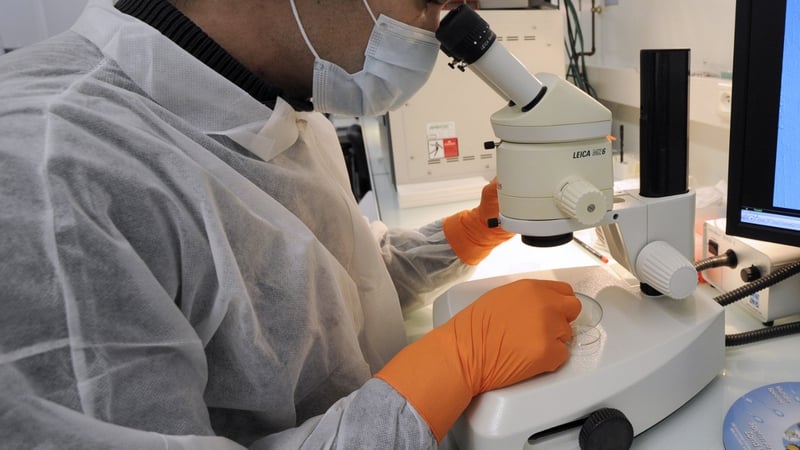
Hopes discovery will help stop spread of prostate cancer
Discovery will help stop spread of prostate cancer

For most, a five-year survival rate is just under 90% but for men diagnosed with advanced stage four cancer, the five-year survival rate is only 22%.
However, researchers have found that combining an existing hormone therapy, known as androgen deprivation, with a new drug called OCT1002, can improve treatment effectiveness.
It works by targeting more resistant cancer cells and preventing malignancy and spread.
Dr. McKenna added: "Hormone therapy is an effective treatment but its success with more resistant cancer cells is limited.
"By combining hormone therapy with this new drug we have for the first time discovered a way to destroy these resistant cells that may otherwise lead to relapse or the spread of cancer cells."

The new research builds upon Ulster's University's discovery earlier this year, that low oxygen levels in prostate cancer tumours are responsible for triggering genetic changes.
Those changes accelerate the growth of new cancer cells and can cause patients to relapse within two years of starting the traditional hormone therapy treatment.
"Our next step is to consider a move to clinical trials so we can focus on testing this combined therapy and ultimately develop tailored treatments for individual prostate cancer patients globally," said Dr. McKenna.
The three-year Ulster University study was supported by Prostate Cancer UK, through a £213,000 grant from the Movember Foundation.
The latest results have been published by the journal, Clinical Cancer Research.

Wednesday, 17 February 2016

Recent Acquisitions


Located at 616.858445 CON


Located at 616.99463 PRO


Located at 618.970231 MOY


Located at 174.2 KAL


Located at 362.16 ELI

Tuesday, 31 March 2015

Fitness linked to lower cancer risk

Very fit men in their late 40s are less likely to get lung cancer and colorectal cancer than unfit men, a study in JAMA Oncology suggests.  Their high fitness levels also appear to increase their chances of surviving cancer if they are diagnosed later on.
University of Vermont researchers said even small improvements in fitness could help to reduce cancer risk.
Cancer Research UK said investigating links between men's fitness levels and cancer risk was a new approachBeing physically active and eating a healthy, balanced diet are already known to be important factors in reducing people's risk of developing cancer and other diseases.
But study author Dr Susan Lakoski said it would be more beneficial to tell people how much they needed to improve their fitness in order to reduce their risk of cancer to acceptable levels.
This could come in the form of a personalised plan, which should start with measuring their cardio-respiratory fitness.
This study of 14,000 men aged between 46 and 50, in Texas, tested their cardio-respiratory fitness levels at the outset by making them run on a treadmill to the point of exhaustion.
After that, their fitness levels were regularly tested over an average of six and a half years between 1971 and 2009.
Between 1999 and 2009, 1,310 of the men had been diagnosed with prostate cancer, 200 with lung cancer and 181 with colorectal cancer.
The study found that the men with high levels of fitness in middle-age reduced their risk of lung cancer by 55% and their risk of colorectal cancer by 44%, compared with the men with low levels of fitness - those who took more than 12 minutes to run or walk a mile.

Friday, 23 January 2015

Major new Irish study on prostate cancer

The long-term quality of life of men who have survived prostate cancer varies significantly depending on the main treatment they received, a new Irish study has found. 

Prostate cancer is the most common type of cancer found in men. Every year in Ireland, over 2,000 men are newly diagnosed with the disease and currently, there are more men living with this type of cancer than any other.

Researchers from the National Cancer Registry (NCR) and the Northern Ireland Cancer Registry carried out a study(the PiCTure study Prostate Cancer Treatment, your experience) involving almost 3,400 men who were between two and 18 years post-diagnosis.

This is one of the largest population-based studies of prostate cancer survivors ever carried out globally.

The study found that participants who had received just hormone therapy, or hormone therapy in conjunction with radiotherapy, had a much lower HRQoL than those who had received a radical prostatectomy - an operation to remove the prostate gland and some of the tissue around it.

Read article: 'Long-term health-related quality of life of prostate cancer survivors varies by primary treatment.  Results from the PiCTure (Prostate Cancer Treatment, your experience) study', in Journal of Cancer Survivorship.

Monday, 10 November 2014

Prostate Cancer Service achieved a 41% diagnosis rate in 2013

A total of 1050 men were diagnosed with prostate cancer in the newly established National Cancer Control Programme Rapid Access Clinics in 2013.  The clinics saw over 2,583 men last year and that figure is expected to increase significantly in 2014 with all eight Rapid Access Clinics open. This data was discussed at the Third National Cancer Control Programme Prostate Cancer Quality and Audit Forum, held Farmleigh House on Friday November 7th

Speaking at the Forum, NCCP Director Dr Susan O Reilly stated: “Our diagnosis rate is 41% and this illustrates that we are now providing a good service where GPs refer patients into the system, which aims to ensure that men are provided with their diagnosis within a three to four week timeframe.  For the majority of men who do not have cancer, that timeframe reduces the anxiety that longer waiting involves. And for those men who are diagnosed, their treatment options are discussed and considered by an expert multi disciplinary team who ensure that the patient is given all the options and all the information on the best approach to be taken.”


View more information here

Friday, 21 February 2014

DNA prostate test 'will predict deadliest cancer risk'


DNA testing can predict which men face the highest risk of deadly prostate cancer, scientists say.
The team at the Institute of Cancer Research, in London, say men could soon be offered genetic screening in a similar way to breast cancer in women.
They have shown 14 separate mutations can greatly increase the odds of aggressive prostate cancers, which could form the basis of a test.
Prostate Cancer UK said such testing could "revolutionise" care for men.
Prostate cancer is the commonest cancer in men in many countries, including the UK - where more than 40,000 people are diagnosed each year.
But not every patient has, or needs, invasive therapy that results in severe side-effects.  Identifying which men will need treatment - those who are likely to develop the most aggressive and deadly form of the cancer - is a huge challenge.
The researchers took blood samples from 191 men with prostate cancer and at least three close family members with the same condition.Each was tested for risky mutations - this included the BRCA genes that are involved in repairing DNA and already linked to breast and ovarian cancers.The results, published in the British Journal of Cancer, show that 7% of the men had one of 14 high-risk mutations.The researchers said that it was also these men who had the aggressive prostate cancer that had started to spread around the body.View more information here