Showing posts with label Medical Research. Show all posts

Friday, 9 December 2016

Medical Research - Limerick

Medical technology company Becton Dickinson and Company is to establish a new research and development centre in Limerick, which will bring an additional 100 jobs.

Becton Dickinson and Company, or BD as it is known, employs 600 people in Ireland at sites in DĂșn Laoghaire and Drogheda, and 100 employees already in Limerick.
It is a global company involved in medical technology, diagnostics, medical research and health care management.

BD is establishing a new Research and Development centre of excellence in Limerick

A new Research and Development centre of excellence is being established by the company in Limerick as part of a €21 million investment which will drive its international growth.

It will concentrate on product and software development, clinical research instrumentation, and prototype development primarily for its life sciences business.
The company said this will require significant hiring of R&D staff, collaboration with local universities and the development of new technical capabilities.
An extensive renovation of the former Unigolf premises at Plassy technological park at Castletroy in Limerick will be required which will house its current 100 employees in Limerick, and a further 100 workers as a result of today's expansion announcement.

Wednesday, 18 November 2015

Supporting the Improvement and Management of Prescribing for UTIs (SIMPle)


An initiative to improve the prescribing of antibiotics for urinary tract infections resulted in better-quality prescribing of first line antibiotics, although the number of prescriptions also increased, according to new research carried out by NUI Galway and Oxford University. The study was published 16 November 2015 in the Canadian Medical Association Journal (CMAJ). 


The study involved 71 physicians, 30 general practitioners and 3,500 patients in Ireland (Galway city and county, and Roscommon). Overall, a 20% absolute increase in prescribing of antibiotics according to guidelines was observed in the intervention groups. However, general practitioners also increased overall prescribing of antibiotics for urinary tract infection.

DrAkke Vellinga, Epidemiologist in the College of Medicine, Nursing and Health Science at NUI Galway, and co-author of the study, said: “The increase in overall prescribing of antibiotics for urinary tract infection was unexpected, and it was not possible to conclude whether this was clinically appropriate or an unwanted consequence. The SIMPle study improved the quality of antibiotic prescribing through the use of audit reports and reminders. In a next step, the quantity of antibiotic prescribing for urinary tract infection will be addressed.” 

The World Health Organisation (WHO) has deemed antibiotic resistance animmediate threat to world health. Overuse and overprescribing of antibiotics are major contributors to antibiotic-resistant diseases. Urinary tract infections are one of the most common illnesses for which antibiotics are prescribed. Efforts to curb overuse must involve patients, physicians and other health care workers, pharmaceutical companies and policy makers. 

To view the SIMPle research video visit:https://www.youtube.com/watch?v=buyeYTt1uQs 

Tuesday, 28 April 2015

€30 Million SFI Investment in Scientific Research

Dr Laoise McNamara's project on osteoporosis was one of three NUI Galway projects funded.

Minister for Skills, Research and Innovation, Damien English TD today announced over €30 million of research funding for 23 major research projects. The Programme will provide funding over a four to five year period, for 23 research projects involving over 100 researchers. Funding for each project will range from €500,000 to €2.3 million.

Three of the projects are led by NUI Galway researchers, and in partnership with University of Limerick, are significantly involved in a fourth project. 

Two of the projects are listed below:

Dr Laoise McNamara, NUI Galway - This research project will advance understanding of mechanobiology to develop treatment approaches for bone pathologies. Tissues of the human body can adapt in response to mechanical forces by a cellular process known as mechanobiology. Although mechanobiological processes are fundamental to normal bone physiology and may play an important role in the development of osteoporosis, the role of mechanobiology in bone development and changes occurring during ageing are not yet fully understood. Moreover mechanobiological responses have not been targeted as treatments for osteoporosis, nor have they been sufficiently exploited to develop novel regenerative tissue strategies.

Dr Alan Ryder, NUI Galway - Many drugs for human health are complex biological molecules like proteins which are made in living cells on an industrial scale. Both the cell food (media) and the protein products have to be carefully analysed to make sure that they are good and safe. Both media and proteins are very complex mixtures that are difficult to analyse. Here we will build a faster, cheaper, and non-contact way of testing using light to generate chemical information from these mixtures. This information will then be analysed using advanced statistical methods (chemometrics) and the results used to improve manufacturing, and reduce drug costs.

Thursday, 12 March 2015

Be cautious about claims that daily coffees are good for heart

At best, the study found an association between coffee-drinking and lower coronary calcium scores. This is long way from proving causation, a more difficult challenge that would require a randomised forward-looking study

A recent article in the Irish Times questions a study in Heart journal :-

“People who drink three to five coffees a day are less likely to develop clogged arteries that could lead to heart attacks” is a headline that must have sent coffee drinkers’ hearts beating faster in anticipation of future guilt-free consumption.

It follows the publication of a study in the medical journal Heart, which studied a group of more than 25,000 South Korean men and women with an average age of 41, who had no signs of heart disease.

The researchers at the Kangbuk Samsung Hospital in Seoul examined the relationship between levels of coffee consumption and the coronary artery calcium (CAC) score, which is calculated from a CT scan.

Both the press releases and reportage of the research left much to be desired. At best, the study found an association between coffee-drinking and lower coronary calcium scores. This is long way from proving causation, a more difficult challenge that would require a randomised forward-looking study.

Then there is the issue of the CAC score itself. This is a parallel marker indicating the possibility of a furred-up coronary artery. However, it is not the gold standard measurement – that is an angiograph which directly visualises each coronary artery and is the ultimate arbiter of the presence of coronary heart disease.

“Moderate coffee consumption lessens risk of clogged arteries and heart attacks.” It has all become more than a little confusing. Not long ago, coffee was a confirmed member of the “bad for you club”. Now it is claimed to be so good you should drink up to five cups a day to avoid developing heart disease.

Fat is another dietary factor that has undergone rehabilitation. For decades we were advised to avoid saturated fat to keep our cholesterol in check.

People stopped eating steak and limited their egg and milk intake. The resulting gap was filled with sugar and carbohydrate, which has contributed to a worldwide obesity epidemic.

What is the confused consumer to do? A certain scepticism of mainstream health reportage would help. If possible, try to find out more about the original research – and when it comes to coping with “yo-yo” dietary trends, the sage advice of “everything in moderation” has stood the test of time.
Friday, 22 August 2014

Irish Researchers Create Wearable Sensors Using Rubber Bands


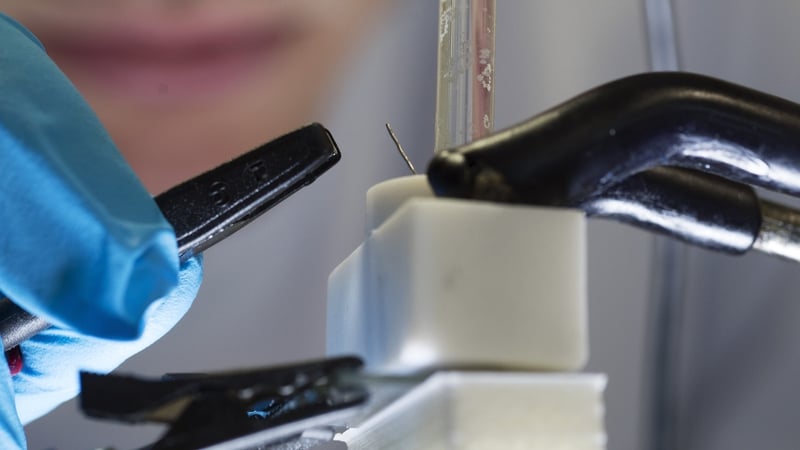
Ordinary rubber bands could be transformed into wearable sensors for monitoring blood pressure, joint movement and blood glucose, as a result of a discovery by researchers at the AMBER materials science centre and Trinity College, Dublin.
The method involves adding graphene to the rubber bands, the first time this has ever been successfully achieved anywhere in the world.
Dubbed a wonder material, graphene is made from a single flat layer of carbon atoms.
It is super strong, flexible and conductive, and scientists believe it will in future be used to make all sorts of products, from flexible mobile phones to lighter aeroplanes.
But scientists at the AMBER materials science centre and the School of Physics at Trinity College Dublin have found another use.
In a paper published in the journal ACS Nano, they describe how adding graphene to shop-bought rubber bands, can transform them into wearable sensors.
The world first technique makes the rubber conduct electricity, without degrading its mechanical properties.
As the stretching of the bands strongly effects the flow of electrical current, the bands can sense tiny movements, like a pulse when attached to clothing for example.
The scientists say the discovery will lead to multiple uses in areas like healthcare, the automotive industry and robotics
The paper, Sensitive, High Strain, High-rate, bodily motion Sensors based on Graphene-Rubber Composites, is available here.

Monday, 25 November 2013

NUI Galway HPV and Head and Neck Cancer Symposium Commended at the Irish Healthcare Awards.


L-R: Professor Ivan Keogh Academic Department of Otolaryngology, NUI Galway & Galway University Hospitals, Diarmuid Coughlan, Economics of Cancer Research Group, Department of Economics NUI Galway, Mr. Tony O’Connor, Academic Department of Otolaryngology, NUI Galway & Bon Secours Hospital Galway
An NUI Galway symposium jointly organised by the Department of Economics and the Academic Department of Otolaryngology was acknowledged in the “Best Educational Meeting” category at the annual Irish Healthcare Awards earlier this month. There were thirteen entries short-listed and the HPV and Head and Neck Cancer symposium , held on 17th May earlier this year, received a commendation from the expert judging panel at the recent award ceremony.
Professor Ivan Keogh, Director of the Academic Department of Otolaryngology at NUI Galway said “It is a real honour to have our symposium acknowledged at these prestigious awards. I am really very impressed by the extremely high standard of the activities which achieved short listing.”

Friday, 22 November 2013

Fewer hospital admissions for alcohol-related liver disease


Hospital admissions for alcohol-related liver disease have begun to drop, according to a new study. The research by doctors from St Vincent's Hospital and the Mater Hospital in Dublin show that 14,000 people were admitted to hospital for the treatment of alcohol dependence in 2011.That was a 17% decrease on 2010.

However, it follows a trebling of people being treated for liver damage from the mid-90s until 2010.

Professor Aidan McCormick at St. Vincent's Hospital, said while the reduction in hospital admissions was good news, a corresponding decrease in liver disease is not yet apparentHe said the findings could point to a different pattern of drinking among Irish people. 

Wednesday, 20 November 2013

Health of Dementia Caregivers Focus of New Trinity Research

The health and well-being of partners who care for people with dementia is the subject of a three-year study being undertaken by researchers at Trinity College Dublin’s Institute for Neuroscience.


Researchers at Trinity are looking to recruit 300 participants for its De-Stress project which will study the stress levels and cognitive function of Irish dementia caregivers. The study, being conducted by Trinity’s NEIL (Neuro-Enhancement for Independent Lives) programme, will provide information on the determinants of the health of carers of people with dementia.

The study is funded by the Alzheimer Society of Ireland and the Health Research Board under the Medical Research Charities Group funding scheme.

Professor Brian Lawlor, Clinical Director of NEIL and Conolly Norman Professor of Old Age Psychiatry at Trinity, commented: “You can’t treat the person with dementia without taking the caregiver into consideration. By understanding the effects of caregiving on cognitive functioning, we can think about how to develop novel interventions that will benefit the caregiver but also will have a knock on benefit for the person with dementia. Ultimately, we want to improve the quality of life of the person with dementia and their caregiver, allowing the person with dementia to be able to stay at home with a good quality of life for as long as possible.”

view full article and more information here

See also:  Creating Excellence in Dementia Care: A research review for Ireland's National Dementia Strategy. Cahill, S., O'Shea, E., & Pierce, M. (2012).DSIDC’s Living with Dementia Research Programme. Dublin: Trinity College School of Social Work and Social Policy; Irish Centre for Social Gerontology; National University of Ireland, Galway


Friday, 15 November 2013

Linking Social Sciences and Medical Research

Social Science and Medicine studies are supported through online resources which  illustrate the value of interdisciplinary team research:

Social Science and Medicine is available through the ScienceDirect Database


Social History of Medicine  - Oxford University
Publishes work on the social history of medicine through a variety of disciplines:

Social History of Medicine

The Discovery of Insulin in 1922 may be viewed through the The Journal of Biological Chemistry Discovery of Insulin - published in 1923.

Canadian, Frederick Banting (1891-1941), received the Nobel Prize for his research work which permitted the discovery of insulin
see  http://link.library.utoronto.ca/insulin/