Showing posts with label Technology. Show all posts

Friday, 9 December 2016

Medical Research - Limerick

Medical technology company Becton Dickinson and Company is to establish a new research and development centre in Limerick, which will bring an additional 100 jobs.

Becton Dickinson and Company, or BD as it is known, employs 600 people in Ireland at sites in Dún Laoghaire and Drogheda, and 100 employees already in Limerick.
It is a global company involved in medical technology, diagnostics, medical research and health care management.
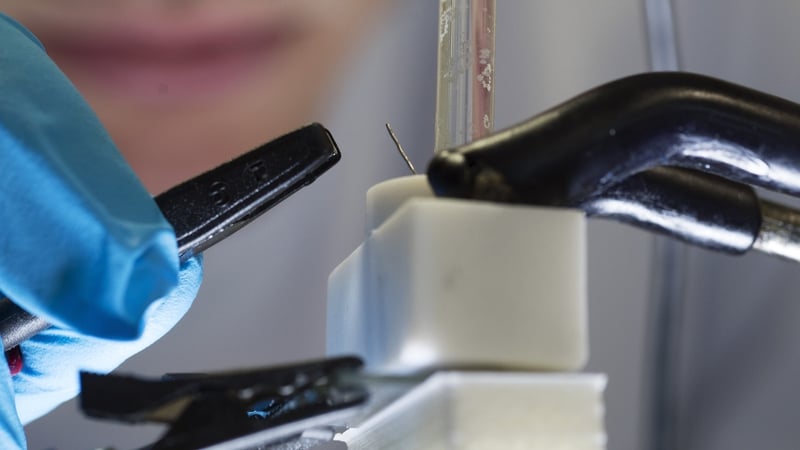
BD is establishing a new Research and Development centre of excellence in Limerick

A new Research and Development centre of excellence is being established by the company in Limerick as part of a €21 million investment which will drive its international growth.

It will concentrate on product and software development, clinical research instrumentation, and prototype development primarily for its life sciences business.
The company said this will require significant hiring of R&D staff, collaboration with local universities and the development of new technical capabilities.
An extensive renovation of the former Unigolf premises at Plassy technological park at Castletroy in Limerick will be required which will house its current 100 employees in Limerick, and a further 100 workers as a result of today's expansion announcement.

Wednesday, 11 March 2015

New hospital technologies could improve patient safety, says Hiqa

Assessment of how IT could improve outcomes follows chief medical officer request
The introduction of new technologies could lead to reduced mortality, increased patient safety, shorter waiting lists and reduce hospital overcrowding, the Health Information and Quality Authority (Hiqa) has said.

Dr Máirín Ryan, Hiqa’s director of health technology assessment and acting deputy chief executive, said a survey of 32 hospitals nationally to identify electronic systems currently in use in Ireland found limited use of such systems outside two hospitals where the technology was being used in very restricted settings.

She said the evidence from other countries was that such systems led to increased accuracy in the recording of vital signs which in turn led to improved mortality rates and morbidity rates for patients, the latter evidenced by reduced lengths of stay in hospital.  

“The results of one study from the UK which most closely reflected the Irish context, and which specifically looked at the switch from a paper-based to an electronic system, indicated that the reduction in length of stay could lead to a substantial increase in hospital bed capacity... and a potential reduction in waiting lists,” she added.

A recommendation for the introduction of an early warning score was recommended by the National Clinical Effectiveness Committee in 2013.

Another of the report’s key recommendations was the introduction of a national early warning score across the wider hospital system.

As part of its assessment, Hiqa carried out a systematic review of the available literature in this area, examining 10 studies on electronic early warning systems and 17 on electronic clinical handover systems internationally, including one Irish study.

Hiqa recommended that all electronic early warning and clinical handover systems be developed in line with National Clinical Effectiveness Committee quality assured National Clinical Guidelines.

Wednesday, 2 April 2014

Can we really become addicted to technology?


Through smartphones, tablets, laptops and their apps, technology now influences almost every aspect of our lives, and many fear that this digital way of life can be dangerously addictive.
BBC Newsnight asked psychologist Tanya Byron to investigate if there is something inherently addictive about modern technology, and if there really is something to fear.