Yet to some, it’s what keeps them strong.
Unnerved by the thought of death, of burial, of being cremated, it offers a glimmer of hope that perhaps one day, their life could resume. Finality would no longer be, well, final.
One might even argue that it is an alternative to religion, for those who like the idea of, but do not believe in an afterlife.
Except in the case of cryonics, there are many ethical, moral and scientific dilemmas apparent in the current life, which must be dealt with in the here and now.
Issues which have been thrown into the spotlight by the recent tragic case of a 14-year-old girl in Britain.
“JS”, as she is known, sought High Court help in ensuring her mother had the sole right to decide to send her body to cryonic storage following her death from cancer – in line with her wishes.
Rather than being a case about the right to use cryonic services, in fact the case was effectively a family law issue.
The court was simply asked to mediate in a dispute between JS’s mother and her estranged husband, who was concerned about JS’s wish to be frozen in time.
Inevitably, however, the media attention and public interest surrounding the court action has focused less on the actual issue in the case, and instead spawned a debate about the use of cryonics.
It should, of course, be remembered that cryonics isn’t new.
The first human to be cryo-preserved was Californian psychology professor James Bedford, who was frozen following his death in 1967.
However, the theory and discussion underpinning it dates back decades earlier.
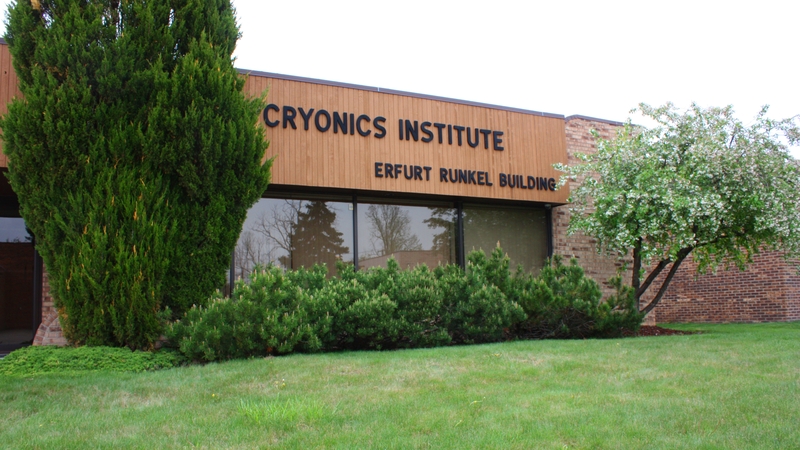
Indeed, it might come as a surprise to many people that a whole industry has now built up around the process, with several companies in the US and Russia offering cryonic services for as little as $25,000.
And while the numbers aren't huge, people are using the service - including some in Ireland according to one US provider.
But while the process and access to such services has developed, the fundamental ethical and moral questions remain the same.
First, and most fundamentally, apart from hope, what exactly are people buying?
Right now, scientists can’t even cryopreserve healthy organs and bring them back to life again properly for transplantation, let alone seriously diseased or worn ones.
So to project ahead to a time when it is possible to freeze a healthy or even damaged dead body and then successfully thaw it back into life is something of a giant leap.
And even then, bringing back a body is one thing, but bringing back a functioning brain with a fully conscious mind is quite another.
Perhaps as machine learning, artificial intelligence and neurological monitoring technology progresses, it might in time become feasible to download and then upload the contents of a brain.
But that won’t happen today, or tomorrow.
Aside from the practicalities of it all, there are also many questions around ethics.
For starters, informed consent is the key to any medical procedure.
But if you don’t know much about what you are consenting to, how can you give that informed consent?
For example, anyone signing up for cryopreservation doesn’t know how long they will be frozen for.
Nor do they know under what circumstances they will come back to life.
And as for who will make that decision in hundreds of years’ time – well that is anyone’s guess.
Is it right to sell a dream to someone, when you have no inkling whatsoever about how the reality will turn out?
Who will be there when they are woken up? What kind of state will they and the world around them be in?
Will there even be someone to wake them up?
One early cryonics attempt at Chatsworth in the US failed when those behind it ran out of money and left the bodies to decompose, for example.
There’s also the even more sinister danger of cryonics potentially being used as a means of prematurely euthanising someone.
Of course science has an on-going uncanny ability to confound our expectations, upend our understanding of what is normal.
After all, if it didn’t, then what would be the point of research?
But what’s clear is that right now, cryonics poses many threats and challenges and offers few definitive answers.
The need for regulation is, therefore, growing so that people can’t be exploited, expectations can’t be falsely raised and scientific fact can’t be undermined.


