Showing posts with label HRB. Show all posts

Tuesday, 15 November 2016

Galway Research on MRSA

Scientists in Galway have discovered that penicillin can be used to make other antibiotics or the body more effective at fighting MRSA.

The finding may open up new avenues for combating antimicrobial resistance, which is claiming an increasing number of lives around the world.
The microbiology team at NUI Galway, working in conjunction with the University of Liverpool, found that while penicillin cannot kill MRSA, it weakens its virulence.
The research, published in the Journal of Infectious Diseases, shows that the penicillin causes the bacteria to switch off its toxin genes and thicken its cell wall.
The body's own immune system and other antibiotics can then exploit this state of change to kill off the infection.
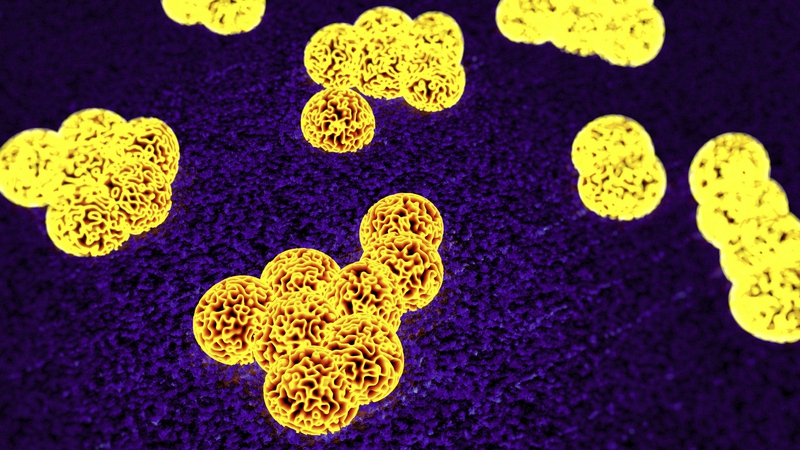
MRSA can be extremely virulent

A recent report from the UK government found that antimicrobial resistance infections, will cause more deaths than cancer by 2050 if not addressed urgently.
Caused by a form of the staphylococcal bacteria, MRSA is resistant to most antibiotics used to treat ordinary infections, and up to a fifth of patients who contract it die from the infection.
The research was funded by the Health Research Board and Medical Research Council.
"Our findings explain the anti-virulence mechanism of penicillin-type antibiotics and support the re-introduction of these drugs as an adjunct therapeutic for MRSA infections.
"MRSA can be extremely virulent, which is part of the challenge in treating it," said Professor James O'Gara from NUI Galway.


Thursday, 13 October 2016

Heart Attack Risk - Doubles!

The risk of heart attack beyond other risk factors more than doubles when someone is angry, emotionally upset or has engaged in heavy physical exertion, according to a new analysis by scientists at NUI Galway.

However, the risk more than triples when patients are angry or emotionally upset, and are engaged in physical exertion. The researchers say the triggers seem to independently increase a person's risk of heart attack beyond other risk factors, such as age, smoking, obesity, high blood pressure and other health problems linked to heart attack.

The data has emerged from the largest study of its kind ever conducted, which involved more than 12,000 heart attack patients from 52 countries around the world with an average age of 58.


The study involved more than 12,00 heart attack patients

Each of the participants completed a survey about the different triggers they had experienced in the same hour of the day of, and the day prior to, their heart attack.
Critically though the authors of the research, published in the journal Circulation, say the findings do not negate the benefits of regular physical activity in preventing heart disease and attack.
"Previous studies have explored these heart attack triggers; however, they had fewer participants or were completed in one country, and data was limited from many parts of the world," said Dr. Andrew Smyth, study lead author and a researcher at the HRB Clinical Research Facility at NUI Galway.
"This is the first study to represent so many regions of the world, including the majority of the world's major ethnic groups."
The authors say the results suggest that people at risk of heart attack should avoid extreme emotional situations, and instead should consider peer support, during difficult periods of their life.

Friday, 6 November 2015

Chronic pain sufferers invited to join free online treatment programme

A recent online treatment programme, set up by expert psychologists and physiotherapists, aimed at helping those who suffer from chronic pain, has been extended due to the number of inquiries received in recent weeks.

The Centre for Pain Research at NUI Galway, with the support of the Health Research Board, is currently recruiting people with chronic pain (pain which has lasted for three months or more). The Acceptance and Commitment Therapy (ACT) trial will provide eight online sessions to people in the comfort of their own home. At the moment, such supports are mainly available through specialised hospital-based pain management teams.

Chronic pain affects up to 35% of the Irish population and is increasingly recognised as a disease in its own right. Chronic pain is sometimes associated with psychological effects, which may include anxiety and changes in mood, as well as forgetfulness, and difficulties in focusing attention, planning tasks and making decisions. The ACT trial is based on emerging clinical science that demonstrates the usefulness of managing chronic pain through mindfulness and psychological wellbeing.

The study is open to people all over Ireland and will take place over the coming months. GPs and physiotherapists around the country are being encouraged to refer suitable people with pain to the study.

To find out if you are eligible, visit http://centreforpainresearch.com/actstudy.html and complete the online survey.

For further information contact Dr Christopher Dwyer at the Centre for Pain Research, NUI Galway or emailpainresearch@nuigalway.ie, or see the website http://www.nuigalway.ie/centre-for-pain-research/. Alternatively, phone 091 495391. GP’s or physiotherapists who are interested in referring suitable patients to the trial can also use these contact details.

Wednesday, 4 November 2015

Research into best models of palliative care

The project is one of two new projects that will look at how to best organise and deliver healthcare services in palliative care and epilepsy.

‘Each of these projects aims to provide solid evidence that will support the development of the best models of care in their respective areas’, says Graham Love, the Chief Executive of the HRB.  ‘Over the past few years, the HRB, HSE and Royal College of Physicians in Ireland have made a focussed, coordinated effort to increase the level of funding available for quality and patient safety research that addresses knowledge gaps of national priority. These two projects are the latest ones to come through that process’.  

According to Professor Charles Normand, Trinity College Dublin, who will be conducting detailed research into what are the best models of palliative care in an Irish context; 
‘We do not know enough about the extent to which better provision of palliative care takes pressure off other health and social care. Nor do we know enough about the effects of different models of palliative care on the burden on families and informal care givers.  There are a lot of important and as yet unanswered questions regarding the strengths and weaknesses of different models of care, the extent to which those that cost more achieve more, and the differences in experiences and outcomes.'

 Dr Mary Fitzsimons, from Beaumont Hospital will lead the project on patient-centred epilepsy care.

These latest awards will join two ongoing projects in Emergency medicine and Rheumatology care that have been funded under this partnership scheme, the RCQPS (the Research Collaboration on Quality andPatient Safety). To date over €1.5 million has been committed to research under this specific scheme.  

Wednesday, 22 April 2015

Writing competition for International Clinical Trials Day

Want to win an iPad Air and get your story in the Irish Times? The HRB Trials Methodology Research Network (HRB-TMRN) is running a national writing competition to mark this year's International Clinical Trials Day which takes place on 20 May.
This competition is open to everyone wishing to provide a perspective on clinical trial research, including patients, clinicians, researchers, academia and industry.
It must be written for a general audience and no more that 800 words in length.
  • The deadline for submission is Wednesday 6 May 5.00pm.
  • Entries should be sent to hrb-tmrn@nuigalway.ie with 'IT COMPETITION' in the subject line.
The winning entry will appear in the Irish Times Health and Family Supplement on 19 May 2015 (subject to editorial approval).
Full competition details are available from the HRB-TMRN website 

Friday, 20 February 2015

Are you interested in biomedical research funding opportunities?


SFI, the HRB and the Wellcome Trust will co-host two information days about funding available under the SFI-HRB-Wellcome Trust Biomedical Research Partnership. They will take place on 25 March in Galway, and 26 March in Dublin

The full programme, timetable and registration details for each location are available from the links below. Please register by selecting the breakout session in your preferred location that is most relevant to your career stage. The same information will be presented in each venue by the Wellcome Trust.
Attendance is free, but you will need to register for your preferred location.
Queries can be e-mailed to contact(at)wellcome-ireland.com

Tuesday, 4 November 2014

€13.5 million Funding for Health Research

(L to R) Graham Love, Chief executive HRB, Leo Varadkar, TD, Minister for Health, Prof Neil Rowan, Athlone Institute for Technology

Cancer, asthma, kidney injuries and antibiotics are just some of the areas likely to benefit from €13.5 million in funding for new health research projects announced recently by Minister for Health, Leo Varadkar.

A total of 36 projects are being supported by the Health Research Board (HRB) over the next three – five years. 

Announcing the investment, Minister Varadkar said:  "These 36 projects cover a huge range of areas, including research into stem cell research to fight pneumonia, developing diet and exercise plans following cancer surgery and combating osteoporosis in older HIV patients. Others will look at how to help asthma sufferers who cannot control their condition, new treatments for resistant types of breast cancer, and the impact of salt on kidney function. Many of these projects receiving funding today will go on to make a real difference to people’s lives, not just in Ireland but around the world."

The research teams are spread across Ireland, with researchers linked to TCD, UCD, NUI Galway, UCC, RCSI, Athlone Institute of Technology, Maynooth University and University of Limerick. The HRB will monitor progress in each project and will receive annual and end-of-grant reports. The outcomes from the projects will be assessed, using an international framework, in terms of short and medium terms outcomes like new knowledge, research capacity building, and informing policy. The HRB will also look at the longer term impact of each project such as new innovations including devices, new diagnostics, approaches to care; changes in policy or practice; or economic and commercial activity such as patents and spin-offs.

View full list of Projects here

View Press Release on HRB 

Friday, 12 September 2014

Health Research Board committed to national 'biobank' rollout

Biobanking is the storage of surplus tissue samples donated by patients for research.

The Health Research Board has said it is committed to assisting with the rollout of a national biobank network covering all illnesses here. 
Earlier, Irish scientists warned that plans for a national network of storage facilities for tissue and blood samples used for cancer research are in jeopardy because of a failure by the Government to deliver promised investment.
The Biobank Ireland Trust has said €1m in State and private funding is required to progress plans for a national biobank network, without which cancer research is being held back.
The Board, which provides Government funding to health related research projects, says it accepts that Ireland is somewhat behind the curve when it comes to developing a biobank network, but it is catching up.
It says it is already investing heavily in a range of biobanking projects around the country, and that it recognises the need for a joined up network. 
The Board is currently part of an international effort to agree biobanking standards by 2017, and is going to send experts to bring that knowledge back here.
It says it aims to provide seed funding to agencies to help them connect to the infrastructure, and also intends making biobanking a cost eligible for funding in future research grants, provided standards are met.
However, it has warned that setting up such a network is a gradual process which will take time, so that value for money can be assured for the taxpayer.
Biobanked samples are linked to coded patient data held in a searchable database accessible by scientists.
Biobanks are particularly useful for cancer researchers, because freezing tissue and blood samples preserves genes and proteins that control how cancer grows.
Fully developed national biobanks have proven valuable resources in other countries.
But they have only been developed by a small number of individual hospitals in Ireland, with a limited amount of national coordination.
The first web-based searchable Irish biobank cancer database was announced today by the Biobank Ireland Trust.
But those behind it said without promised Government investment, the viability of a full scale national cancer biobank research facility will be in jeopardy.
They said €1m is needed from the State and private sources to secure the project and successful ground-breaking cancer research into the future.
Medical Director of Biobank Ireland Trust Professor Eoin Gaffney said: "A dedicated biobank cancer database will make the most of Ireland's resources for patient-focused cancer research by linking Ireland's biggest hospitals in a Biobank network.

Friday, 22 August 2014

New insights into spread and survival of blood cancer cells

NUIG haematologist Prof Michael O’Dwyer(pictured above) : worked with Prof Lokesh Joshi of NUIG’s glysoscience group and Dr Siobhán Glavey on studying the complex sugars which cover all cells in the human body, and many of the proteins in the bloodstream.
Researchers at the National University of Ireland Galway have identified an enzyme that has a key role in the spread and survival of blood cancer cells. The discovery, which focused on the cancer multiple myeloma, has just been published by the internationally acclaimed journal, Blood.
Multiple myeloma is a cancer of the blood which results from an overproduction of plasma cells, the white blood cells that produce antibodies. It leads to problems such as anaemia, bone damage, kidney failure and elevated calcium levels. There are about 240 new cases of multiple myeloma diagnosed each year in Ireland.
HRB Clinician Scientist, Michael O Dwyer, Professor of Haematology at the National University of Ireland Galway says; “While treatments for multiple myeloma have improved over the last decade, and most patients are living longer, there is no cure. Our research is crucial because it sheds new light on the biology of multiple myeloma which could lead to new strategies to overcome resistance to treatment.”
“In essence, we have linked the overproduction of a specific enzyme called sialyltransferase to disease progression and worse outcomes in multiple myeloma. The increase in this enzyme activity causes a series of knock on effects; increasing glycosylation, which in turn increases the interaction of the cancer cells with receptors on the walls of blood vessels called selectins which then encourages their circulation, spread and retention in the bone marrow.”
“Our aim now is to prevent these interactions that cause the spread using specific enzyme and selectin inhibitors”.

Thursday, 15 May 2014

NUI Galway Information Evening to Highlight Clinical Research

The HRB Clinical Research Facility, Galway (CRFG) is holding a public information evening on Tuesday, 20 May from 5-7pm in the Clinical Sciences Institute, NUI Galway (on the grounds of Galway University Hospital).
The information evening will highlight how ongoing clinical research studies may lead to significant medical breakthroughs and the development of new treatments. It is also an opportunity to find out more about current research projects and to meet current CRFG staff.
Professor Martin O’Donnell, Acting Director, HRB CRFG, said: “Clinical research involves a collaboration between clinicians, patients, volunteers and research staff. Therefore, public engagement is an essential part of clinical research. Over the past six years, the HRB CRFG has developed a strong clinical research group, conducting studies across a wide spectrum of medical conditions. We strive to conduct cutting-edge research, which adheres to the highest standards.”
The HRB Clinical Research Facility, Galway is a joint venture between NUI Galway, Galway University Hospitals and West Northwest Hospital Group. 
Work has begun on the new Clinical Research Facility and Translational Research Facility (CRF-TRF) building located on the grounds of Galway University Hospital. The building is due to be completed in January 2015. The CRF-TRF will facilitate cutting-edge medical research. This facility will form part of the Irish Network of Clinical Research Facilities which will conduct state of the art clinical research in a variety of clinical areas, such as Cardiology, Cancer, Endocrinology, Gastroenterology, etc.
So, what is a Clinical Trial?  
A Clinical Trial is a research study to answer specific questions about a new medical treatment (medicine/drug, medical device, new therapies, vaccines), or new ways of using known treatments. Clinical Trials (also called medical research and research studies) are used to determine whether such new treatments are both safe and effective. Carefully conducted Clinical Trials are the fastest and safest way to find new and effective treatments that work in people.
The CRFG Information Evening is free to attend, however advance registration is requested by emailing  crfg@nuigalway.ie

Tuesday, 29 April 2014

Cochrane Collaboration in Ireland


Health systems and individuals in Ireland will benefit from the appointment of a new leader for Cochrane Ireland - a venture which will actively promote the use of the best available research evidence to inform decision-making about health.
This new initiative will build on the excellent work achieved already by Cochrane* locally. The initiative is being funded by the Health Research Board and HSC Research & Development Division, Public Health Agency, Northern Ireland and supported by the UK Cochrane Centre.  
To progress the initiative, Dr Dónal O’Mathúna**, has just been appointed as Convenor of Cochrane Ireland and Associate Director of the UK Cochrane Centre.
'Cochrane is a highly regarded international organisation with a reputation for producing high-quality credible information to help patients and professionals with both ordinary and difficult health care decisions', says Dr O’Mathúna. 'My aim is to ensure that Cochrane Ireland makes a practical contribution to the health and social care systems across the Island of Ireland'.
*The Cochrane Collaboration is a global independent network of health practitioners, researchers, patient advocates and others, responding to the challenge of making vast amounts of evidence generated through research available in meaningful ways to inform decisions about health.
**Senior Lecturer in Ethics, Decision-Making and Evidence, in the School of Nursing and Human Sciences at Dublin City University. Dónal is also an experienced Cochrane author and trainer. He will take up this new post as a part-time secondment for three years.

Wednesday, 2 April 2014

Research may lead to a new bowel cancer detection method

HRB-funded research at the Royal College of Surgeons in Ireland, and just published in the European Journal of Clinical Microbiology and Infectious Diseases, could lead to a new biomarker for bowel cancer
Long, pointy Gram-negative rods typical of Fusobacterium nucleatum. Image from www.infectionnet.org

The research, led by Dr David Hughes at the Department of Physiology and Medical Physics, RCSI found a significantly increased presence of a common microbe, Fusobacterium nucleatum (Fn), in tissue and stool samples of patients with colorectal cancers and colorectal benign tumours.
Commenting on the findings, Dr Hughes said,
'Our research found that cancer patients with low bacterial levels had significantly longer survival times than patients with moderate and high levels of the bacterium. Also, for patients with a benign tumour, we found that the presence of the bacteria may be a risk factor for disease progression from tumour to cancer. This is a significant finding because it highlights the potential of Fn detection as a possible indicator of colorectal cancers'.

View full article here
Efforts to combat Fn infection could be considered for colorectal cancers patients with high levels of the bacterium to improve the survival prospects for these patients.
More details are available from the RCSI 

Thursday, 9 January 2014

3 NUI Galway Researchers Among Ireland’s 6 Health Research Board Leaders Chosen to Lead New €9m Initiative

Dr. Brian Maguire, Psychology, NUI

The Health Research Board (HRB) has appointed six new HRB Research Leaders as part of an €9 million investment to address strategic gaps and leadership capacity in population health and health services research in Ireland.

3 of the 6 HRB Research Leaders for Ireland are based in NUI Galway. Professor Ciaran O’Neill, Dr Molly Byrne and Dr Brian Maguire have been chosen as research leaders to deliver relevant and timely evidence that can be used in health care decision-making and are designed in consultation with leading healthcare decision makers.

Many of the research programmes are addressing areas which have traditionally been under-funded, but are crucial, such as health economics and biostatistics. All the research leaders will create a solid foundation of expertise and evidence to deliver better health, reduced health care costs and new approaches to care that benefit patients, care providers and the economy.
President of NUI Galway Dr Jim Browne congratulated Professor Ciaran O’Neill, Dr Molly Byrne and Dr Brian Maguire and said ‘this is a significant investment by the HRB to ensure that the work carried out by our research leaders helps society by helping decision makers make better choices. NUI Galway is focused on ensuring that our research improves the world around us through discovery and innovation, further education and greater choice.’

Friday, 6 December 2013

'Picture of Health 2013' launched


Carrying excess fat on the waistline could prevent cancer killing cells from doing their job, according to a new Health Research Board (HRB) funded study. This fat can become inflamed in obesity and it has been linked with increased risk of several cancers including one called oesophageal adenocarcinoma. The findings are described in the latest edition of the HRB’s Picture of Health 2013 which was published Thursday 5th December.

The annual Picture of Health publication highlights, in non-technical language, recent and exciting developments arising from Irish health research funded by the HRB. Selected research featured includes projects completed in 2012 that seek to improve patient care, search for better treatments and inform health policy and practice.

‘Research is of most benefit when it is applied in policy or practice. The HRB Picture of Health clearly demonstrates how our funding is delivering improvements for people’s health, patient care and health service delivery. But it also highlights the calibre, innovative thinking and expertise of the health professionals and academics involved in health research here in Ireland. Our current investment is actively supporting  these experts in their pursuit of better treatments, innovative approaches to care and provision of strong evidence to support positive changes in health policy and practice’.
View Press Release here