Showing posts with label Microbiology. Show all posts

Tuesday, 11 April 2017

Latest Edition


Cover for 

Oxford Handbook of Infectious Diseases and Microbiology


  LOCATED  -  616.9 TOR


New to the 2nd Edition - 2017:
  • Includes new topics such as microbiology specimen collection, commonly used media, molecular diagnostics, and antimicrobials in pregnancy
  • Incorporates new guidelines published since the previous edition, with weblinks where available

Tuesday, 15 November 2016

Galway Research on MRSA

Scientists in Galway have discovered that penicillin can be used to make other antibiotics or the body more effective at fighting MRSA.

The finding may open up new avenues for combating antimicrobial resistance, which is claiming an increasing number of lives around the world.
The microbiology team at NUI Galway, working in conjunction with the University of Liverpool, found that while penicillin cannot kill MRSA, it weakens its virulence.
The research, published in the Journal of Infectious Diseases, shows that the penicillin causes the bacteria to switch off its toxin genes and thicken its cell wall.
The body's own immune system and other antibiotics can then exploit this state of change to kill off the infection.
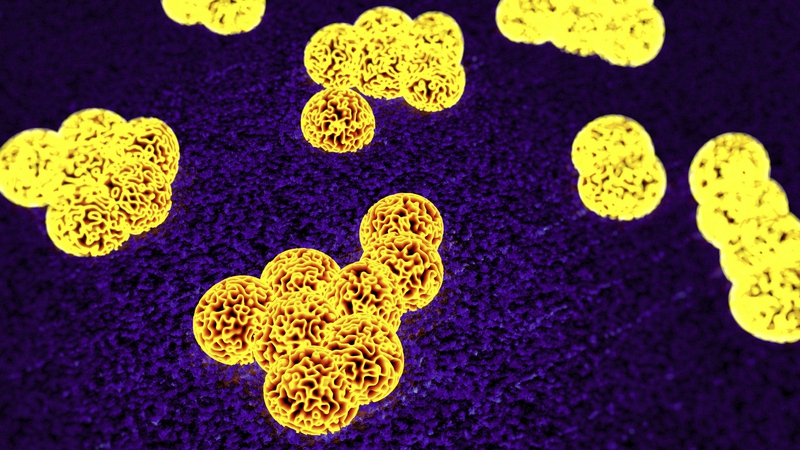
MRSA can be extremely virulent

A recent report from the UK government found that antimicrobial resistance infections, will cause more deaths than cancer by 2050 if not addressed urgently.
Caused by a form of the staphylococcal bacteria, MRSA is resistant to most antibiotics used to treat ordinary infections, and up to a fifth of patients who contract it die from the infection.
The research was funded by the Health Research Board and Medical Research Council.
"Our findings explain the anti-virulence mechanism of penicillin-type antibiotics and support the re-introduction of these drugs as an adjunct therapeutic for MRSA infections.
"MRSA can be extremely virulent, which is part of the challenge in treating it," said Professor James O'Gara from NUI Galway.

Tuesday, 5 April 2016

Recent additions to Nursing & Midwifery Library

Located at 618.361 HEA


Located at 616.025 EME


Located at 617.1 ESS


Located at 615.50724 OXF


Located at 331.12916182 HAN


Located at 618.2 JOH


Located at 610.73072 POL

Wednesday, 22 January 2014

NUI Galway Study Shows Salmonella Biofilms Resistant to Powerful Disinfectants

Research by Dr Mary Corcoran was prompted by 2012 European Salmonella Agona outbreak resulted in over 160 cases of gastroenteritis in 10 countries.
An NUI Galway researcher has discovered that once Salmonella gets into a food processing facility it is very difficult to remove it. Microbiologist Dr Mary Corcoran attempted to kill Salmonellabiofilms on a variety of hard surfaces, using three types of disinfectant.
The research, to be published in the Journal of Applied and Environmental Microbiology, shows that once Salmonella has established itself for seven days, it was not possible to kill Salmonellausing three disinfectants, even by soaking the Salmonella in disinfectant for an hour and a half.
The research found that all of the types of Salmonella studied were able to adopt the specialised biofilm lifestyle on all of the surfaces looked at. These included glass, stainless steel, glazed tile, concrete and plastic. It shows that the biofilm of Salmonella gets more dense over time, and becomes more firmly attached to the surface.
The findings will serve as a warning to food processors in particular highlighting that onceSalmonella gets into a food processing facility and has an opportunity to form a biofilm on surfaces, it is likely to be extraordinarily difficult, if not impossible, to kill it.
The research was prompted by the Salmonella outbreak in Europe in which over 160 people in 10 countries developed gastroenteritis from the Salmonella Agona strain of Salmonella. That outbreak was traced to meat from a major food-processing facility.