Showing posts with label GPs. Show all posts

Wednesday, 19 April 2017

Tele-medicine; Smartphones / GPs

The first tele-medicine service that allows patients be treated by their GPs using a smartphone has been launched.


The service, GP Online, is being piloted in six doctor surgeries in urban and rural locations and it will be rolled out nationwide during the year.
Online Medical consultation is a major growth area in health and several national and international companies are active in the Irish market.
This is the first service to allow patients to talk to their own GP from the comfort of their home or office.
The advantage is that patients are talking to the doctor who is familiar with their medical history and has all their records to hand, GP Online chief executive, Aidan Callaly said.

7 action items providers can take to launch telemedicine successfully

Monday, 14 November 2016

Delay with Vaccinations!

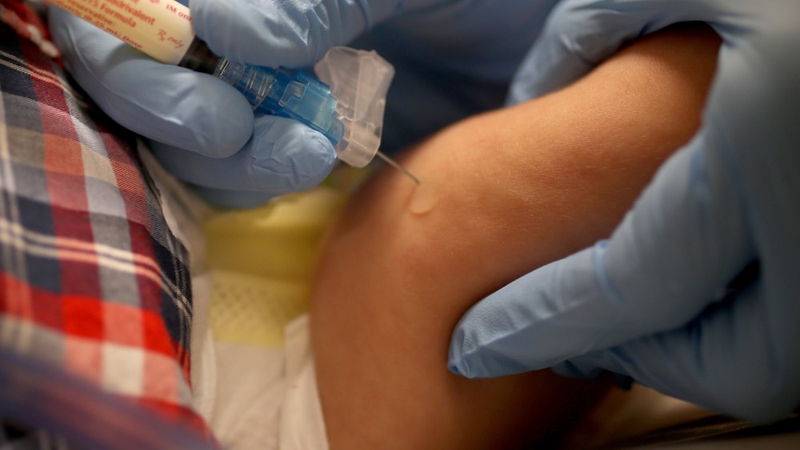
GPs have warned that there could be delays to the rollout of two new vaccinations for newborn babies.

The Department of Health and the Health Service Executive had planned to add two new vaccines to be given by GPs, to all babies born after 1st October.
The planned expansion of the current vaccination scheme was due to come into effect from 1 December.
These vaccines protect against conditions such as meningitis, septicaemia and serious cases of diarrhea.
However, GPS in the Irish Medical Organisation have warned of delays to the rollout of the vaccines.
The organisation said it had a meeting with the HSE six weeks ago during which it said extra resources and fees would be required to go towards the additional GP and nurse time required to extend the vaccination scheme.
However, GPs say they have not had any contact from the HSE about the matter since.
In a statement, the HSE said there would be a timely rollout of the programme once the matter of a fee for GPs has been resolved.

Vaccination programme could be delayed

Dr Austin Byrne of the IMO's GP Committee said the vaccines are important and GPs have played a "key role in ensuring that Ireland has one of the most effective immunisation regimes in the world but this experience makes me fearful that this will be lost."
He said the delay is due to a lack of engagement between the HSE and the department and the IMO and the administering of the vaccines will mean that visits to the GP will be twice as long and GPs must be reimbursed for this.
Speaking on RTÉ's Morning Ireland, Dr Byrne said: "There are no additional visits but the visits that will take place at two months, four months and six months will be significantly longer and the HSE's own advice on this is that we need to apply an allocation of about twice the amount of time - so twice the amount of nurse time or twice the amount of GP time."
He said that there are 65,000 children who are due to receive these vaccines.

Wednesday, 9 November 2016

Risks to Children!

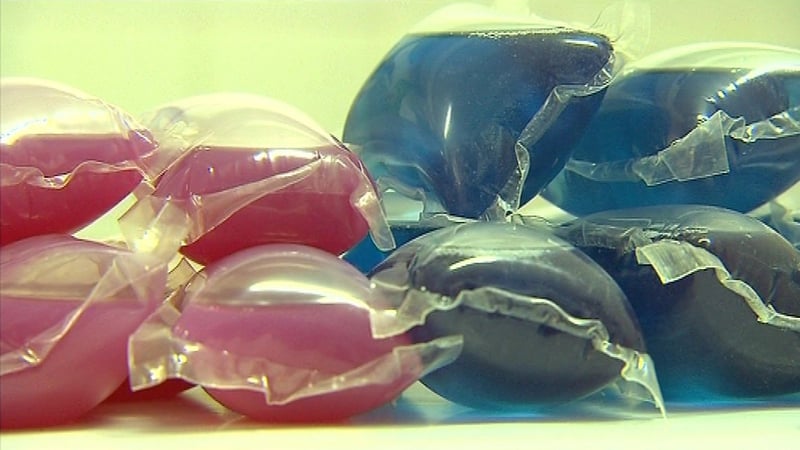
The National Poisons Information Centre has issued a warning about the potential risks posed to children by liquid detergent capsules and room fresheners.

The centre has also reported an increase in calls, according to its annual report for 2015.
There were 9,691 inquiries to the centre last year, up 2.4% on the previous year.
Inquiries about liquid detergent capsules increased by 8% and the vast majority of the 344 cases involved children under the age of five years.
In one case, a child required intensive care admission.
While the number of calls from the public has increased, most calls are from GPs and hospital staff.
Over 5,220 calls to the centre last year related to children under ten years.
The report shows that most calls are about drugs, with paracetamol the most common drug involved in poisoning.

One child required intensive care in a case related to a liquid detergent capsule

It says that 82% of cases are accidental and 15% are intentional overdoses, or a result of recreational abuse.
Most poisonings happen in the home and often involve household cleaning products and chemicals.
Dr. Edel Duggan, Clinical Director at the Centre, has issued an alert to parents about room fresheners, sold as a liquid, in glass containing reeds.
The liquid diffuses up the reeds and a perfume is released from the reeds.
Dr. Duggan said that if ingested, both the carrier and the fragrance oils are potentially toxic, depending on the components.
The centre has also asked parents of young children to keep liquid capsules out of reach and locked away in their original containers.
It says that in most cases, contacting the poisons centre can avoid unnecessary emergency department attendances, reduce health care costs and alleviate parental anxiety.
The National Poisons Information Centre is based at Beaumont Hospital in Dublin.

Monday, 16 February 2015

New research to guide GP management for patients with multiple chronic illnesses

The new research recommends providing continuity of care with one named GP where possible, prioritising the aspects of care that matter most to patients (such as difficulties in physical functioning), and providing regular reviews of prescriptions. The study, recently published in the British Journal of Medicine, was led by researchers at the HRB Centre for Primary Care Research in the Royal College of Surgeons in Ireland.

The paper entitled, ‘Managing patients with multimorbidity in primary care' can be viewed online on the BMJ website at http://www.bmj.com/content/350/bmj.h176

Current clinical guidelines, which recommend best practice for GPs, tend to focus on single conditions which make decision making more challenging for those patients with several co-existing conditions.

Commenting on this publication, Graham Love, Chief Executive at the Health Research Board said,
‘It is very important that care for people with multimorbidity is organised and delivered based on best research evidence in order to improve the outcomes that really matter to patients. This review offers guidance for GPs to help support this process.’

More information is available from the press release on the RCSI website.

Wednesday, 28 May 2014

Trust your doctor, not Wikipedia, say scientists

Wikipedia, the online encyclopaedia, contains errors in nine out of 10 of its health entries, and should be treated with caution, a study has said.
Scientists in the US compared entries about conditions such as heart disease, lung cancer, depression and diabetes with peer-reviewed medical research.
They said most articles in Wikipedia contained "many errors".
Wikimedia UK, its British arm, said it was "crucial" that people with health concerns spoke to their GP first.
The online encyclopaedia is a charity, and has 30 million articles in 285 languages.
It can be edited by anybody, but many volunteers from the medical profession check the pages for inaccuracies, said Wikimedia UK.
The open-access nature has "raised concern" among doctors about its reliability, as it is the sixth most popular site on the internet, the US authors of the research, published in the Journal of the American Osteopathic Association, said.
Up to 70% of physicians and medical students use the tool, they say.
The 10 researchers across America looked at online articles for 10 of the "most costly" conditions in the US, including osteoarthritis, back problems and asthma.
They printed off the articles on 25 April 2012 to analyse, and discovered that 90% of the entries made statements that contradicted latest medical research.

View more information here on BBC/Health

Wednesday, 12 February 2014

Suicide Crisis Assessment Nurse (SCAN)

A new service provided by Galway and Roscommon Mental Health Services went live last week. The Suicide Crisis Assessment Nurse (SCAN) service aims to provide support to General Practitioners (GP), and patients who present to them in difficult circumstances with thoughts of suicide. Access to the service is via a single mobile phone number, this gives GPs a direct access to the SCAN allowing for speedy referral and an immediate discussion of the case.  Shaun Smith, SCAN, has taken up his new post in GUH and is working with all the Community Mental Health Teams.  The post is one of the key posts that are being implemented as part of the reconfiguration of mental health services in Galway/Roscommon.

Following referral and discussion with the GP, the SCAN will arrange to see the client at the GP surgery within the coming days.  The patient will have a complete full bio-psychosocial assessment, identifying risk factors, and supports available etc, ending finally with an agreed plan of care aimed at alleviating the crisis and supporting longer term stability.


Catherine Cunningham, Galway Roscommon Area Manager, welcomed the new service saying, “In Ireland, the majority of individuals experiencing mental health problems will visit their General Practitioner (GP) and will remain exclusively under their care. People are generally much more comfortable with being seen in this environment, however, in the past GPs had no other choice but to refer individuals with mental health problems to specialist mental health services.  These are often based in the local hospital, with individuals often uncomfortable or unwilling to engage.  This new SCAN service allows GPs to get professional, specialist mental health advice for their patient in the GP practice or the patient’s home – a major development for patients with mental health difficulties.”

View more information here

National Office for Suicide Prevention

Friday, 31 January 2014

Trusty stethoscope faces threat from portable hi-tech

The stethoscope has long been the main tool in the doctor's toolkit
In TV medical dramas, doctors and nurses are never without one. At the surgery, it is the GP's best friend.
Along with the white coat, the stethoscope is among the most recognisable symbols of the medical profession.
But according to an editorial in the journal Global Heart this week, the stethoscope is in its death throes, in danger of being consigned to medical history, having been overtaken by technology.
So are the stethoscope's days numbered?
Used to listen to the internal sounds of the human body, particularly the heart, lungs and abdomen, the stethoscope has been around for nearly 200 years.
However, Prof Jagat Narula and associate professor Bret Nelson, from Mount Sinai School of Medicine in New York, believe that handheld ultrasound devices are set to take over from the traditional stethoscope.
They say this is because ultrasound technology is becoming more accurate, the devices are reducing in size and their cost gradually decreasing.
However, Dr Sarah Clarke, a consultant cardiologist at Papworth Hospital in Cambridge and vice-president of the British Cardiovascular Society, says the stethoscope is a doctor's main diagnostic tool.
"We don't leave home without it. You can't replace what you hear if you're a doctor. It's a big part of our training.

Tuesday, 26 November 2013

Neurology Update - Introducing Oxford Short Guides


Oxford Medicine
  • A collection of short guides covering a range of topics in neurology
  • Each title summarizes up-to-date research literature in a style that has direct clinical application for busy healthcare professionals
  • Search and browse within a specific title, or across all the content subscribed to on Oxford Medicine Online
  • Images can be downloaded to be used in clinic with patients and peers
The Oxford Neurology Library Online (ONLO) is a collection of short guides covering a range of topics within neurology. Each title summarizes up-to-date research literature in a style that has direct clinical application for busy healthcare professionals. The texts are aimed at neurologists, neurology trainees, clinical nurse specialists, and other healthcare professionals managing neurological conditions in patients.

All content on ONLO can be browsed using the table of contents, or readers can use the in-built search facility to jump to the specific topic, figure or table that is most relevant to their needs. Additional features provide enhanced access to artwork, giving readers the option to enlarge images and to download images of particular interest directly to PowerPoint.

Offering practical information in an easy-to-access format, Oxford Neurology Library Online is an invaluable introduction for trainees and nurses and a handy reference for general neurologists.

Readership: Neurologists, trainees, clinical nurse specialists, and interested GPs.