Showing posts with label Pharmacy. Show all posts

Tuesday, 22 November 2016

Fingerprints reveal Lifestyle

Traces of skin, oil and grime left on your phone, can reveal a lot about your lifestyle, and may some day serve as a "fingerprint" in criminal investigations, researchers have said.

The study involved 39 volunteers who allowed scientists to swab their smart phones - and right hands - in several places.
Researchers found a bounty of chemical information left behind on the devices.
These included anti-inflammatory and anti-fungal skin creams, hair loss treatments, anti-depressants and eye drops, according to the study in the Proceedings of the National Academy of Sciences.
They also found food molecules from citrus, caffeine, herbs and spices.
Sunscreen ingredients and DEET mosquito repellent were detected months after they had last been used by the phone owners.
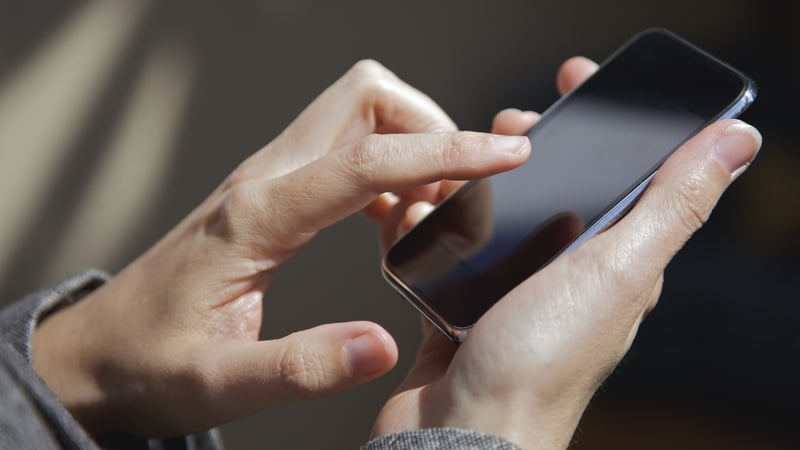
Researchers found lots of chemical information left behind on mobile devices
Researchers found lots of chemical information
left behind on mobile devices

"By analysing the molecules they've left behind on their phones, we could tell if a person is likely female, uses high-end cosmetics, dyes her hair, drinks coffee, prefers beer over wine, likes spicy food, is being treated for depression, wears sunscreen and bug spray - and therefore likely spends a lot of time outdoors - all kinds of things," said study co-author Amina Bouslimani of the University of California, San Diego.
"This is the kind of information that could help an investigator narrow down the search for an object's owner."
Other applications could include criminal profiling, airport screening, medication adherence monitoring and environmental exposure studies.
"You can imagine a scenario where a crime scene investigator comes across a personal object - like a phone, pen or key - without fingerprints or DNA, or with prints or DNA not found in the database," said senior author Pieter Dorrestein, of the San Diego School of Medicine and Skaggs School of Pharmacy and Pharmaceutical Sciences.
"They would have nothing to go on to determine who that belongs to. So we thought, what if we take advantage of left-behind skin chemistry to tell us what kind of lifestyle this person has?"
The study was considered a "proof of concept" exercise, and more work is needed to refine the techniques for widespread use.
For now, the approach can only provide a general profile of person's lifestyle, not a one-to-one match.

Friday, 21 February 2014

New approach cuts hospital medicine errors


A new way of managing medicines in hospitals could significantly reduce the incidence of medication errors, an Irish study has found.

A medication error is a mistake involving a medication. This could include a mistake with the dose, adding a medication that should not be present or missing out on a medication altogether.  Such errors can affect how a drug works or could result in a patient requiring further medical care. A small number of errors even have the potential to cause serious harm.

The study, the first of its kind in Ireland, was carried out by researchers at Trinity College Dublin (TCD) and the pharmacy department of Tallaght Hospital. It involved doctors and hospital pharmacists taking a more collaborative approach to the management of medicines within the hospital setting.

This approach involved doctors and pharmacists working together at the time of admission, during the hospital stay and at discharge. With standard care, a hospital pharmacist would be involved at the time of admission and during the stay, but not at the time of discharge and they would not have the same degree of communication and collaboration with doctors.

The study showed that this new approach led to a 78% reduction in the number of patients experiencing medication errors at the time of admission to hospital, and a 79% reduction in errors at the time of discharge.
Details of this study are published in the journal, BMJ Quality & Safety.

View more information here

Friday, 6 December 2013

Pharmacy Education -

The WHO, UNESCO, FIP, Pharmacy Education Taskforce: Enabling concerted and Collective Global Action,  Am J Pharm Educ. 2008 December 15; 72(6): 127.

Pharmacy Education is a priority area for the International Pharmaceutical Federation (FIP), the global federation representing pharmacists and pharmaceutical scientists worldwide that is spearheading the Global Pharmacy Education Taskforce. This paper describes the work of the Taskforce that was established in March 2008, explores key issues in pharmacy education development, and describes the Global Pharmacy Action Plan 2008-2010.

Given the significance of pharmacy education to the diverse practice of contemporary pharmacists and pharmacy support personnel, there is a need for pharmacy education to attain greater visibility on the global human resources for health agenda. From this perspective, FIP is steering the development of holistic and comprehensive pharmacy education and pharmacy workforce action to support and strengthen regional, national, and local efforts.

Click on title above for full article