A Canadian town has apologised after a water treatment plant turned the water supply pink.
Residents of Onoway, Alberta, complained to the town office, when taps began running pink water on Monday.
In a statement, Mayor Dale Krasnow said there was no public health risk but the town "could have done a better job communicating what was going on".
The mayor said it was the unfortunate side-effect of a common water-treatment chemical, potassium permanganate.
The chemical is commonly used to remove iron and hydrogen sulphide from water, and the town office said it got into the reservoir when a valve malfunctioned during "normal line flushing and filter backwashing".
"While it is alarming to see pink water coming from your taps, potassium permanganate is used in normal treatment processes to help remove iron and manganese and residents were never at risk."
The chemical can cause skin irritation, according to the World Health Organization, but there were no reports of any adverse effects.
Complaints were more about being kept in the dark - residents said they were annoyed they were not told why the water was fluorescent pink, until Tuesday morning.
"This is a situation we can certainly learn from and develop a strategy for better response and communication should we ever face the same or similar situation in the future," the mayor said.
Showing posts with label Dermatology. Show all posts
Showing posts with label Dermatology. Show all posts
Thursday, 9 March 2017


Thursday, 20 October 2016
New Technology to Address Bedsores!
New technology designed to eliminate the problem of painful, potentially dangerous and costly bedsores is being tested within Irish hospitals.
The new wireless device is able to detect the pressure sores up to ten days, before they appear on the skin's surface, giving clinicians time to treat them before they become problematic.
Pressure ulcers are injuries to the skin and underlying tissue resulting from prolonged pressure on the skin, and most commonly develop on skin in bony areas of the body, like heels, ankles, hips and tailbone.
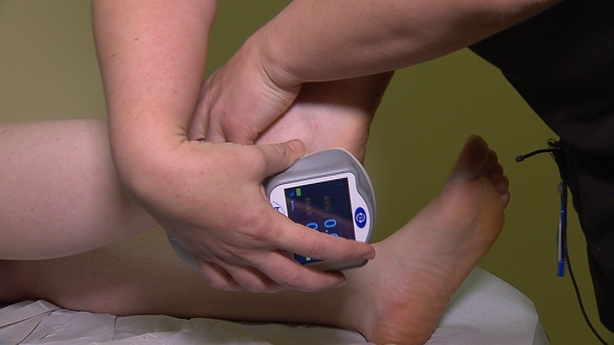
The handheld SEM Scanner, from California based Bruin Biometrics, detects increases in sub-epidermal moisture which is a biophysical marker of damaged skin.
Long-stay hospital patients who are confined to bed and people who suffer from reduced mobility, are at increased risk of developing the problem.
If left untreated they can become very painful, can lead to blood infection, and even death.
It is estimated that as well as causing great discomfort and distress to patients and their families, bedsores cost the Irish health service €250 million a year to manage.
Last year nearly one in ten serious medical events in Irish healthcare institutions was related to late-stage bedsores.
Traditionally pressure ulcers have been identified through visual inspection by care-givers, and treated using established protocols.
However, often by the time the sore is visually apparent and spotted, much damage has already been done, making it more difficult and time consuming to treat.
"The challenge with the visual assessment is that we can't see what is going on under the skin," said Professor Zena Moore, Head of School of Nursing and Midwifery at the Royal College of Surgeons in Ireland.
The new wireless device is able to detect the pressure sores up to ten days, before they appear on the skin's surface, giving clinicians time to treat them before they become problematic.
Pressure ulcers are injuries to the skin and underlying tissue resulting from prolonged pressure on the skin, and most commonly develop on skin in bony areas of the body, like heels, ankles, hips and tailbone.
The handheld SEM Scanner, from California based Bruin Biometrics, detects increases in sub-epidermal moisture which is a biophysical marker of damaged skin.
Long-stay hospital patients who are confined to bed and people who suffer from reduced mobility, are at increased risk of developing the problem.
If left untreated they can become very painful, can lead to blood infection, and even death.
It is estimated that as well as causing great discomfort and distress to patients and their families, bedsores cost the Irish health service €250 million a year to manage.
Last year nearly one in ten serious medical events in Irish healthcare institutions was related to late-stage bedsores.
Traditionally pressure ulcers have been identified through visual inspection by care-givers, and treated using established protocols.
However, often by the time the sore is visually apparent and spotted, much damage has already been done, making it more difficult and time consuming to treat.
"The challenge with the visual assessment is that we can't see what is going on under the skin," said Professor Zena Moore, Head of School of Nursing and Midwifery at the Royal College of Surgeons in Ireland.
Tuesday, 23 September 2014
Recent additions to our library

Located at 618.76 COX

Located at 362.1 THU

Located at 616.5 ABC

Located at 618.9201 DAV

Located at 649.1 SPO
Subscribe to:
Posts (Atom)