Showing posts with label Doctors. Show all posts

Friday, 27 January 2017

Germany Remembers!

Germany has marked International Holocaust Remembrance Day with a tribute to the 300,000 ill and disabled people killed under the Nazis' "euthanasia" programme, who are often seen as forgotten victims of that era.

In a solemn ceremony at the German Bundestag, parliament speaker Norbert Lammert said the programme was the first to use gas to murder those considered "unworthy of living" and served as a "trial run for the Holocaust".
"It became the model for the mass murder that would follow in the Nazi extermination camps," he said in a speech attended by Chancellor Angela Merkel and relatives of victims.
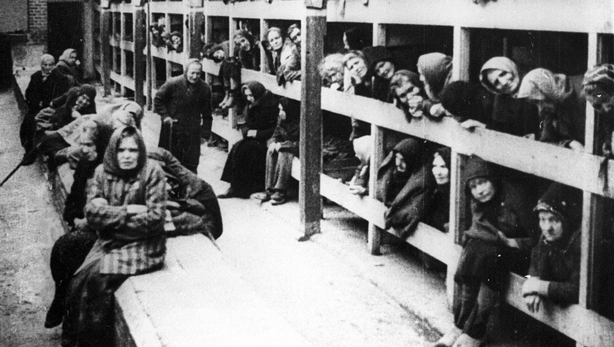
Adolf Hitler's euphemistically named euthanasia programme, in which doctors and scientists actively participated, sought to exterminate the sick, the physically and mentally disabled, those with learning disabilities and those considered social "misfits".

Between January 1940 and August 1941, doctors systematically gassed more than 70,000 people at six sites in German-controlled territory, until public outrage forced them to end the overt killing.
But tens of thousands more died across Europe until the war's end in 1945, through starvation, neglect or deliberate overdoses administered by caregivers.
Many also underwent bizarre medical experiments and forced sterilisations because of their supposed genetic inferiority.


During the ceremony, an actor with Down syndrome read out a letter from one of the victims, Ernst Putzki, who wrote to his mother in 1943 describing the inhumane conditions at the institution where he was being held in Weilmuenster, Western Germany.
"Death from starvation is hard on our heels and no one knows who will be next," he wrote.
"Before, the people here were killed more quickly and their bodies were taken for burning at dawn. But this was met with resistance from the locals.
"So now we are simply left to starve."
Mr Putzki died in January 1945, officially of pneumonia.

Ceremonies are held around the world each year on 27 January to remember the World War II victims of the Nazis.
The day coincides with the anniversary of the liberation of the Auschwitz-Birkenau death camp in Nazi-occupied Poland by Soviet troops in 1945.
Of the six million Jews killed in the Holocaust, one million were murdered at Auschwitz, mostly in its notorious gas chambers, along with tens of thousands of others including Poles, Roma and Soviet prisoners of war.

Thursday, 15 December 2016

Cork Clinical Trial - Results!

Around 30 patients suffering from advanced melanoma cancer are being enrolled in a clinical trial in Cork, with early results indicating improved survival rates.

The trial involves a combination of two existing treatments.
Doctors are being encouraged to refer suitable patients for inclusion in the clinical trial which is being offered by Cork Cancer Research Centre at Cork University Hospital.
Scientists believe that by delivering an electrical impulse or shock directly to the tumour along with an immunotherapy drug called IPI and low dose chemotherapy survival rates will improve for advanced melanoma patients.
Doctors involved in the clinical trial believe the new treatment will be widely adopted and have described it as one of the first of it's kind in the world.


Tuesday, 4 November 2014

Long-term shift work linked to loss of brain function

The research, by an international team at the University of Toulouse in France, found that this type of work led to an impaired ability to think and remember.
A decade or more working rotating shifts was associated with a loss of brain function equivalent to 6.5 years of age-related cognitive decline, the research showed.
Stopping shift work led to gradual recovery - but one that took at least five years, said scientists.
Disruption of the body clock, which is based on natural day and night cycles, may cause stresses that may affect brain functioning, the researchers believe.
Writing in the journal Occupational and Environmental Medicine, the international team led by Dr Jean-Claude Marquie, concluded: "Shift work chronically impairs cognition, with potentially important safety consequences not only for the individuals concerned, but also for society."
The scientists assessed more than 3,000 workers from southern France who had their mental abilities tested on three occasions over a ten-year period.
Participants were aged 32, 42, 52 and 62 at the time of the first test in 1996.
Around a fifth had worked a shift pattern that switched between mornings, afternoons and nights.
Shift workers had lower average scores for memory, processing speed and overall brain function than those working normal office hours.
Compared with people who had never worked rotating shifts, participants employed this way for ten or more years had lower overall thinking and memory scores.
The scientists, who included researchers from the University of Swansea, said the problems increased with the length of time people worked shifts.
After ten years of rotating shift work the association became "highly significant".
However, there was evidence that the deficits were reversible.
People who stopped working shifts recovered their lost mental function after at least five years.
The researchers wrote: "Measures should be considered that mitigate the impact that prolonged exposure to shift work has on cognitive abilities, including switching to normal day work."