Showing posts with label OECD. Show all posts

Wednesday, 30 November 2016

Irish Healthcare - Overview

Health Service Executive Director General Tony O'Brien has told the Committee on the Future of Healthcare that 80% of Ireland's health services are of a very high standard, but that this is overshadowed by the 20% of services that are not delivered as they should be.

He said despite resource restraints over the past six years of austerity, there have been numerous improvements, including stroke care, where Ireland is now placed in the top three in Europe.
However, Mr O’Brien said treating an older population is costly and getting more costly, and unless this is planned for significant difficulties will emerge in future.
He said the HSE is already seeing the effect on bed capacity.
More emergency work and less elective work is being carried out each year, and if these trends continue the HSE will be unable to accommodate elective work in the future, he said.
Mr O’Brien said the HSE was created with a big bang and was not well thought through, saying it is not possible to manage all staff from one central location.
He said seven hospital groups have been established and should now be allowed time to bed in, adding that a rethink is needed of existing policies and capital expenditure.
Healthcare planning is tied to the electoral cycle, he said, as well as a 12-month economic cycle, which hampers rather than facilitates reform.
Mr O'Brien said Ireland needs to build consensus on health spending and how much taxpayers are willing to hand over for the health service they want.
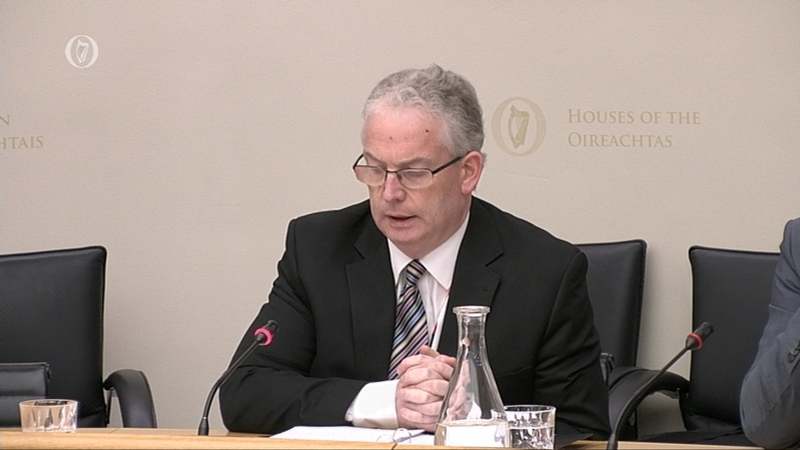
Tony O'Brien said treating an older population is costly and getting more costly
Tony O'Brien, HSE said treating an older
population is costly and getting more costly

Committee chairperson Róisín Shortall questioned whether Mr O'Brien meant that the taxpayer should spend more on healthcare, considering Ireland's spend is close to the top of the OECD at the moment.

Mr O'Brien clarified, saying Ireland is spending a very substantial sum on healthcare, and there is an opportunity to spend that funding better.

Liam Woods, Interim Acting Director of Acute Services, said the HSE reduced agency staff costs by €38 million last year, but there was still a high level of such agency staff.

Thursday, 11 September 2014

Irish Education Under the Microscope


The proportion of young people in Ireland who are unemployed and not engaged in any training or education programme is higher than other developed countries, according to a study published by the OECD.
This year's ‘Education at a Glance’ report found that 22% of Irish young people are in this category, compared to an EU and OECD average of 15%.
In its latest report comparing education systems and outcomes the OECD has found that young people here are far more likely to complete second level education.
Two years ago, 93% of Irish teenagers were expected to complete secondary school, compared to an average OECD rate of 84%.
However despite high rates of educational achievement here the OECD says Ireland's general unemployment rates remain higher than average compared to other member states.
On spending, the latest data finds that Ireland has the third greatest annual expenditure per student compared to all other OECD countries.
In the classroom, this study finds that Ireland's pupil teacher ratio is worse than the OECD and EU average.
The study finds that Irish teachers engage in more teaching time than average, at 915 hours per year at Primary level here compared to an average of 761 hours annually across EU states.
The figure at second level is also considerably higher than the average.
The study finds that teachers here are well paid by OECD and EU standards. Salaries here are higher at all levels compared to the average across other countries.

View more here

Thursday, 21 November 2013

OECD health at a glance report 2013

A major overview of health in Ireland published today shows that the Irish are still near the top of the international league table for smoking and drinking and have a greater propensity towards obesity than people in many other countries.  

The Organisation for Economic Co-operation and Development’s Health at a Glance 2013 report confirms the serious impact of the recession on health spending which had been growing in Ireland at 7 per cent annually during the boom years between 2000 and 2009. 

The report says that the fall in Irish spending reflects the substantial reforms undertaken, including cuts to cost of health care, such as wages and pharmaceuticals.

But the report also confirms the encouraging progress made in combating serious illnesses in the last two decades. Deaths due to cancer fell by 21 per cent, ischemic heart disease by 59 per cent and cerebrovascular disease by 54 per cent between 1990 and 2011. In all three instances, the rate of decline was greater than the OECD average.

However, the smoking data comes from 2007 and therefore may not give a completely accurate picture of current trends.

Click here for link to full article in the Irish Times