Showing posts with label Irish Heart Foundation. Show all posts

Thursday, 19 January 2017

New Irish Cardiac Device

Irish researchers have developed a soft robotic device that fits around a heart and helps it to beat. The invention raises the future possibility of a new form of treatment for patients suffering from heart failure.

The device takes the form of a sleeve that wraps around the outside of the heart and squeezes and twists it in synch with the natural heart beat.
The big advantage of the new device is that unlike other forms of treatment, it doesn't come in contact with blood, reducing the risk of clotting, stroke and the need for the patient to take blood thinning drugs.
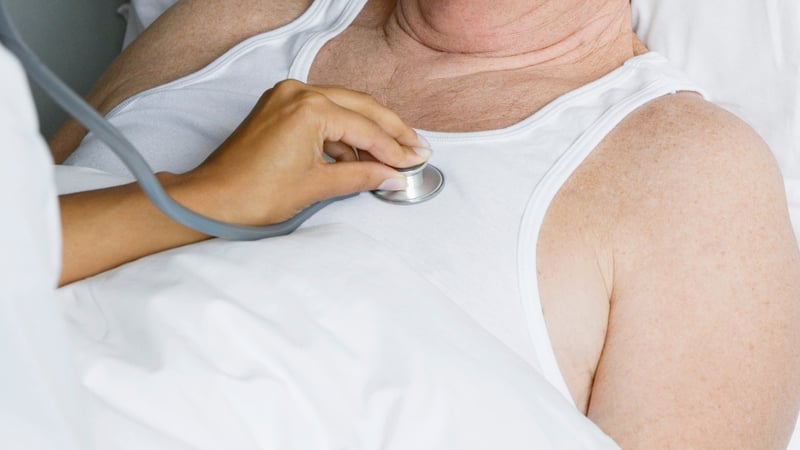
The invention raises the future possibility of a new form of treatment for patients suffering from heart failure
The invention raises the future possibility of a new form
of treatment for patients suffering from heart failure

It is attached to the heart using a gel, sutures and a suction device. It is then connected to an external pump, and this powers the soft actuators.
The device was developed by NUI Galway and Harvard post-doctoral researcher, Dr Ellen Roche, along with Professor Conor Walsh, an Irish engineer based at the Wyss Institute for Biologically Inspired Engineering at the Boston based university.
The current treatments for heart failure are medical management, transplant or use of ventricular assist devices or VADs.
These pump blood from the ventricles of the heart to the aorta, but because they come in direct contact with the blood they can cause dangerous side effects, including stroke and clots.
"The novelty of this device is that it doesn't contact the blood," said Dr Roche.
"Additionally we can actuate different parts of it independently so we can tailor the movement of the device to the patient's needs."
"We can transfer both a compression motion and a twisting motion to the heart which mimics the way the heart beats itself."

Trinity College Dublin graduate, Professor Walsh established Harvard's bio-design laboratory where he and colleagues are developing a range of other soft robotics which have the potential to help people with disabilities.
According to the Irish Heart Foundation, 90,000 people in Ireland are suffering from heart failure with 10,000 new cases reported every year.
The condition also affects 41 million people worldwide.

The new device has been trialled in the lab and in animals, with excellent proof of concept results.
However, it is likely to be between three and five years before it has been refined, tested and approved for use in humans.
Dr Roche said she expects refinements will include trying to make it wireless.
It's hoped that the device could become a bridge to transplants or could be worn by a patient suffering from heart failure for the rest of their life.
"This research is really significant at the moment because more and more people are surviving heart attacks and ending up with heart failure," said Dr Roche.
"Soft robotic devices are ideally suited to interact with soft tissue and give assistance that can help augmentation of function and potentially even healing and recovery."
The research, a collaboration between Harvard's School of Engineering and Applied Sciences, the Wyss Institute and Boston Children's Hospital, is published in the journal - Science Translational Medicine.

Tuesday, 1 November 2016

Rehabilitation Time Limited!

An audit of services for stroke patients by the Health Service Executive has found that 73% of hospitals are unable to provide adequate levels of rehabilitation therapy to those who need it.

The audit, which was conducted in conjunction with the Irish Heart Foundation, shows major nursing, medical and therapy staff deficits in stroke rehabilitation centres.
The incidence of stroke is rising by about 350 cases every year – a rise attributed to the ageing population.
This audit of 26 out of 29 rehabilitation units was carried out to examine the adequacy of services for patients after their initial period of treatment.
It found major deficiencies in vital recovery services for stroke patients, including a lack of nursing staff, medical professionals and psychologists.
It also found that 73% of hospitals were unable to provide recommended levels of therapy.
The HSE's clinical lead for stroke, Professor Joe Harbison, said the health service would probably need around 250 extra therapists for the adequate treatment of stroke.
Almost two thirds of facilities surveyed did not have a stroke specialist.
The vast majority of the hospitals also had no access to community rehab teams to continue essential therapy for patients after they are discharged home.
The audit team recommends a major investment to provide more beds, healthcare professionals, therapists and community teams to deal with the deficiencies highlighted.

The audit looked at 26 of 29 rehabilitation centres

Prof. Harbison said a person's chance of recovering from stroke is "dependent on the skills of the people" who are in the hospital where they being treated.
Speaking on RTÉ’s Morning Ireland, he said this may "depend a little bit on geography, on where your access to specialist rehabilitation services are".
He said these services can also be dependent on age as "a lot of the rehabilitation services in Ireland are run through elderly care services".
In the case of 50% of the units, if "you're under 50, you can't get into the unit" and he said these people are "often left waiting maybe months to get into the National Rehabilitation hospital".
Prof. Harbison said when people have had their initial treatment for stroke, they are moved onto a rehabilitation centre but that's "very often non specific for stroke".
He said there may be certain skills lacking in this centre - while they may get physiotherapy and occupational therapy, they may not get specialist therapy and are unlikely to get the duration of the therapy they need.
He added that they may not get other therapies such as psychology at all, as only one third of the hospitals have any access to psychology services.
Claiming that access to rehabilitation services and sufficient rehabilitation staff is a long-standing problem, Prof. Harbison said rehabilitation should happen in the
first 24 hours of stroke.

Friday, 8 April 2016

Obesity Update (2)

Anaerobic Exercise:
Anaerobic exercise comprises brief, strength-based activities, such as sprinting or bodybuilding, whereas aerobic exercise is centered around endurance activities, such as marathon running or long-distance cycling. However, the early stage of all exercise is anaerobic.
Examples of anaerobic exercise include weight lifting, sprinting, and jumping; any exercise that consists of short exertion, high-intensity movement, is an anaerobic exercise.


Dr. Donal O’ Shea   Dr. Donal  O’ Shea

Consultant Endocrinologist and Joint Chair of RCPI Obesity Policy Group:

Donal O’Shea qualified from University College Dublin in 1989. He moved to Hammersmith Hospital in London and worked as a Registrar in General Medicine, Cardiology and Endocrinology before being appointed as Senior Registrar in Endocrinology. He was awarded a Wellcome Trust Training Fellowship to study the hypothalamic control of appetite. In 1996, he was appointed as Consultant Physician/Senior Lecturer in Diabetes and Endocrinology at Charing Cross Hospital, London.
In 1999, he moved to his current position in St Vincent’s University and St Columcille’s Hospitals, Dublin where he runs a hospital based multidisciplinary treatment unit for the management of adult obesity. He chaired the Detection and Treatment subgroup of the National Obesity Taskforce in 2005, chairs the nutrition council of the Irish Heart Foundation and was appointed associate Professor of Medicine in UCD in 2007.