Showing posts with label Cardiology. Show all posts

Thursday, 19 January 2017

New Irish Cardiac Device

Irish researchers have developed a soft robotic device that fits around a heart and helps it to beat. The invention raises the future possibility of a new form of treatment for patients suffering from heart failure.

The device takes the form of a sleeve that wraps around the outside of the heart and squeezes and twists it in synch with the natural heart beat.
The big advantage of the new device is that unlike other forms of treatment, it doesn't come in contact with blood, reducing the risk of clotting, stroke and the need for the patient to take blood thinning drugs.
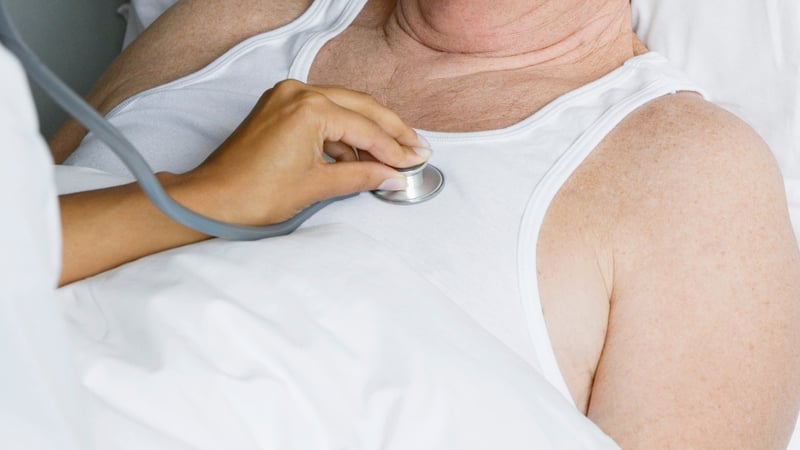
The invention raises the future possibility of a new form of treatment for patients suffering from heart failure
The invention raises the future possibility of a new form
of treatment for patients suffering from heart failure

It is attached to the heart using a gel, sutures and a suction device. It is then connected to an external pump, and this powers the soft actuators.
The device was developed by NUI Galway and Harvard post-doctoral researcher, Dr Ellen Roche, along with Professor Conor Walsh, an Irish engineer based at the Wyss Institute for Biologically Inspired Engineering at the Boston based university.
The current treatments for heart failure are medical management, transplant or use of ventricular assist devices or VADs.
These pump blood from the ventricles of the heart to the aorta, but because they come in direct contact with the blood they can cause dangerous side effects, including stroke and clots.
"The novelty of this device is that it doesn't contact the blood," said Dr Roche.
"Additionally we can actuate different parts of it independently so we can tailor the movement of the device to the patient's needs."
"We can transfer both a compression motion and a twisting motion to the heart which mimics the way the heart beats itself."

Trinity College Dublin graduate, Professor Walsh established Harvard's bio-design laboratory where he and colleagues are developing a range of other soft robotics which have the potential to help people with disabilities.
According to the Irish Heart Foundation, 90,000 people in Ireland are suffering from heart failure with 10,000 new cases reported every year.
The condition also affects 41 million people worldwide.

The new device has been trialled in the lab and in animals, with excellent proof of concept results.
However, it is likely to be between three and five years before it has been refined, tested and approved for use in humans.
Dr Roche said she expects refinements will include trying to make it wireless.
It's hoped that the device could become a bridge to transplants or could be worn by a patient suffering from heart failure for the rest of their life.
"This research is really significant at the moment because more and more people are surviving heart attacks and ending up with heart failure," said Dr Roche.
"Soft robotic devices are ideally suited to interact with soft tissue and give assistance that can help augmentation of function and potentially even healing and recovery."
The research, a collaboration between Harvard's School of Engineering and Applied Sciences, the Wyss Institute and Boston Children's Hospital, is published in the journal - Science Translational Medicine.

Friday, 8 April 2016

Obesity Update (2)

Anaerobic Exercise:
Anaerobic exercise comprises brief, strength-based activities, such as sprinting or bodybuilding, whereas aerobic exercise is centered around endurance activities, such as marathon running or long-distance cycling. However, the early stage of all exercise is anaerobic.
Examples of anaerobic exercise include weight lifting, sprinting, and jumping; any exercise that consists of short exertion, high-intensity movement, is an anaerobic exercise.


Dr. Donal O’ Shea   Dr. Donal  O’ Shea

Consultant Endocrinologist and Joint Chair of RCPI Obesity Policy Group:

Donal O’Shea qualified from University College Dublin in 1989. He moved to Hammersmith Hospital in London and worked as a Registrar in General Medicine, Cardiology and Endocrinology before being appointed as Senior Registrar in Endocrinology. He was awarded a Wellcome Trust Training Fellowship to study the hypothalamic control of appetite. In 1996, he was appointed as Consultant Physician/Senior Lecturer in Diabetes and Endocrinology at Charing Cross Hospital, London.
In 1999, he moved to his current position in St Vincent’s University and St Columcille’s Hospitals, Dublin where he runs a hospital based multidisciplinary treatment unit for the management of adult obesity. He chaired the Detection and Treatment subgroup of the National Obesity Taskforce in 2005, chairs the nutrition council of the Irish Heart Foundation and was appointed associate Professor of Medicine in UCD in 2007.

Thursday, 30 April 2015

'Heart attack breakthrough' - Research

Scientists have discovered a way to stimulate muscle cell growth in the heart, limiting the damage to this vital organ after a heart attack

Scientists have now found a new way to potentially regenerate the heart after a heart attack by replacing lost muscle cells. According to Professor Richard Harvey from the Victor Chang Cardiac Research Institute, this is an important step forward toward repairing a broken heart.

“Unlike blood, hair or skin cells, which can renew themselves throughout life, cell division in the heart virtually comes to a standstill shortly after birth, which means the heart can’t fully regenerate if it is damaged later in life,” Professor Harvey explained.

“Previous studies have demonstrated that it is possible to coax heart muscle cells to proliferate again, but only at very trivial levels.


“What the research team has been able to do is boost heart muscle cell numbers by as much as 45% after a heart attack. That’s a huge improvement!”

Scientists focused on a signalling system in the heart driven by a hormone called ‘neuregulin’.

By switching the neuregulin pathway to ‘turbo charge’ the researchers found that heart muscle cells continued to divide in a spectacular way in both the adolescent and adult periods.

Stimulating the neuregulin pathway during a heart attack lead to replacement of lost muscle.


The study has been published in Nature Cell Biology. To read more click here

View more on Health Canal

Wednesday, 25 March 2015

Study on Sleep Duration and Mortality

We all know that getting too little sleep is bad. You feel tired, you may be irritable, and it can contribute to obesity, high blood pressure, diabetes, and heart disease, doctors say. But too much sleep? You don't often hear people complaining about it.
However, research carried out over the past 10 years appears to show that adults who usually sleep for less than six hours or more than eight, are at risk of dying earlier than those who sleep for between six and eight hours.
To put it more scientifically, there is a gradual increase in mortality risk for those who fall outside the six-to-eight-hour band.
Prof Franco Cappuccio, professor of cardiovascular medicine and epidemiology at the University of Warwick, has analysed 16 studies, in which overall more than a million people were asked about their sleeping habits and then followed up over time.
His analysis showed that 12% more of the short sleepers had died when they were followed up, compared to the medium sleepers.
However, 30% more of the long sleepers had died, compared to the medium sleepers. Cappuccio was aware of the possibility that people sleeping too long might be depressed, or might be using sleeping pills. He corrected for this, though, and found the association was still there.
His own theory is that people who sleep for more than eight hours sometimes have an underlying health problem that is not yet showing in other symptoms.

So, it's not the long sleep that is causing the increased mortality risk, it's the hidden illness.

Friday, 9 May 2014

Gold Medal Launched to Honour Leading West of Ireland Cardiologist!

Dr Jim Crowley, Consultant Cardiologist & Medical Director of Croi, Neil Johnson, CEO Croi; Dr Gerard Flaherty, Programme Director MSc in Preventive Cardiology, NUIG; Jenni Jones, Croi Director of Programmes and Prof Kieran Daly, Consultant Cardiologist Galway University Hospitals.

A gold medal which will be awarded each year to the most outstanding student on the Masters in Preventive Cardiology programme at NUI Galway was inaugurated this week at a special ceremony in the Croí Heart and Stroke Centre, Galway
The Kieran Daly Medal was inaugurated to honour the immeasurable contribution which Dr. Kieran Daly, Honorary Clinical Professor in Medicine at NUI Galway and Consultant Cardiologist at Galway University Hospitals, has made to education and training in Cardiology over a long and distinguished career. Additionally, the medal honours the leadership Dr Daly has shown over many years , firstly as Research & Medical Director of Croí and for the past five years as Chairperson of the organisations Board of Directors, a position which he retired from earlier this month.

The first group of students on the Masters in Preventive Cardiology programme at NUI Galway are due to graduate in November this year. This unique programme is delivered over a 12-month period as a full-time Level 9 degree programme, with most of the didactic and much of the clinical instruction delivered in the state-of-the-art Croí Heart and Stroke Centre in Galway. In addition, students have access to e-learning resources developed by the multiprofessional teaching faculty at Croí and NUI Galway. Places on the programme for 2014/15 are filling fast and any interested applicant should apply at www.pac.ie/nuigalway.

Inactivity 'dominant influence' on women's heart risk

Lack of exercise is the biggest risk factor for heart disease in women aged 30 and above, according to a study.
If all over-30s followed recommended guidelines on exercise, nearly 3,000 lives could be saved each year in Australia alone, say researchers.
More needs to be done to warn women of inactivity, as it outweighs other risk factors such as obesity, they say.
A team at the University of Queensland, Australia tracked the health of more than 30,000 women born in the 1920s, 1940s and 1970s.
They found smoking had the greatest impact on women's heart disease risk below the age of 30.  However, as women got older and more gave up smoking, it was overtaken by physical inactivity as the dominant influence on heart disease risk.
Continuing efforts to encourage people to stop smoking were warranted, the researchers reported in the British Journal of Sports Medicine.
But they said greater effort were needed to promote exercise, which they describe as a "Cinderella" risk factor compared with obesity.
Commenting on the study, Thembi Nkala, senior cardiac nurse at theBritish Heart Foundation, said physical inactivity was a known major risk factor for heart disease.
"Interestingly, this study shows its dominant influence on heart disease amongst women, and suggests a greater need to promote regular physical activity amongst this group," she said.
"It's important to remember that heart disease is linked to other factors such as smoking, obesity, high blood pressure and high cholesterol.
"It's essential to manage these too, as the more risk factors you have, the greater your chance of heart disease. "

Wednesday, 19 March 2014

St. Patrick's Day Science Medal Award:

St. Patrick's Day Science Medal Award:
An Irish cardiologist, Garret A Fitzgerald based in the USA has been awarded the inaugural Science Foundation Ireland St. Patrick's Day Science Medal in Washington DC by Irish Taoiseach, Enda Kenny.

Fitzgerald's Recognition for Cardiac Research:
The research carried out by Dr. Garrett A Fitzgerald has previously been recognised by the international scientific community.
Dr. Fitzgerald's research is focused on the area of biomedical cardiovascular pharmacology and in particular the effects of pain medicines on cardiac systems. He was also played a pivotal role in the discoveries relating to the use of low-dose aspirin in preventing cardiac disease.

Enda Kenny presents Dr. Garret A. FitzGerald with the inaugural SFI St. Patrick’s Day Science Medal in Washington DC today.

Wednesday, 27 November 2013

Cardiovascular Disease - JAMA

The current issue of JAMA is devoted to Cardiovascular Disease -


The editorial note from this issue looks at the 'story of cholesterol'